
Great Design Fast Track
“Great design” or simply faster approvals? The Great Design Fast Track is not limited to activity centres or major developments. Projects of just eight dwellings can qualify for this pathway. If endorsed by the Office of the Victorian Government Architect and approved by the Minister for Planning, developments can override local planning controls, including mandatory building heights, setbacks and garden area requirements. The pathway can apply in residential zones across Victoria, including established suburbs such as Boroondara.
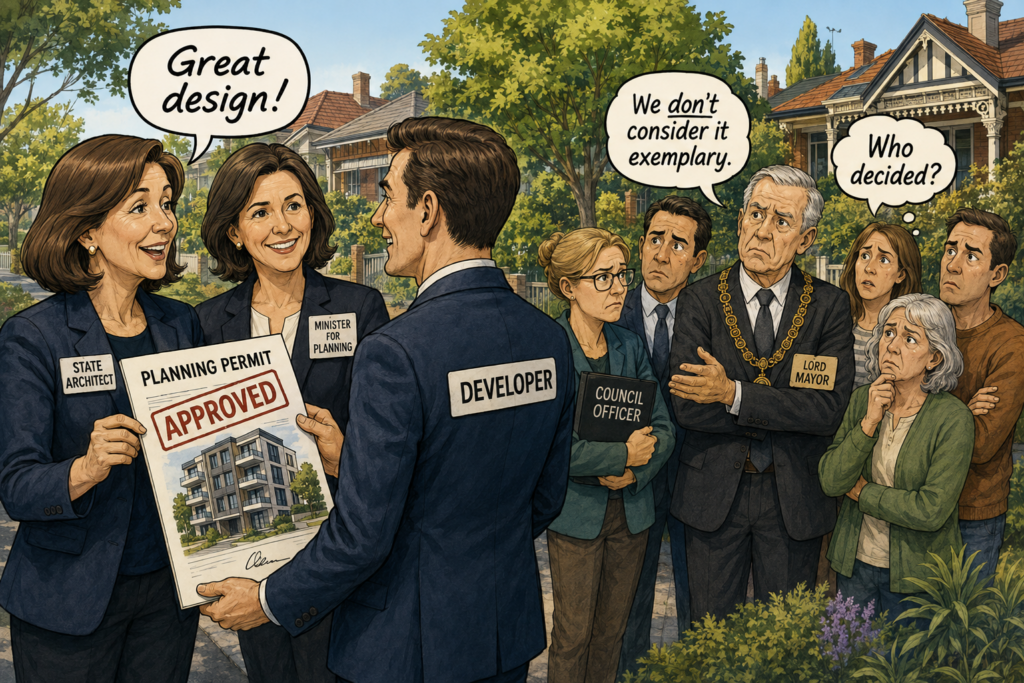
The Victorian Government describes the Great Design Fast Track as a planning pathway that will “promote, reward and expedite” high-quality housing design.
The pathway is based on the idea that residential developments demonstrating Government-defined standards of “great design” should receive faster approvals.
Introduced through Amendment VC280, the Great Design Fast Track allows eligible residential developments of eight or more dwellings to be considered directly by the Minister for Planning through a streamlined assessment process. Proposals are reviewed against the pathway’s design principles, including input from the Office of the Victorian Government Architect, before being assessed outside many of the planning processes that would normally apply.
Supporters argue the pathway will encourage better housing design and reduce unnecessary delays.
Critics question whether “great design” can be assessed independently of the broader planning framework, particularly where the designation also allows local planning controls to be overridden and community rights reduced.
The Great Design Fast Track forms part of the Victorian Government’s broader planning change program, alongside initiatives such as Future Homes and the Development Facilitation Program, all of which seek to streamline residential development through alternative planning pathways.
At a glance
- The Great Design Fast Track is available for residential developments of just eight dwellings or more and can apply across Victoria, not only in activity centres.
- Eligible developments are assessed through a streamlined pathway, with the Minister for Planning rather than the local council making the final decision.
- The pathway permits the Government to override its own rules, including mandatory building heights, setbacks, garden areas and other requirements.
- Councils have a limited role and residents have no right to independent review at VCAT once the Minister has made a decision.
- Access to these significant planning concessions depends on a development being assessed as meeting Government-defined principles of “great design”.
- The pathway raises a fundamental question: should a state-appointed assessment of “great design” be enough to override local planning rules and remove normal planning safeguards?
Centralised decision-making
One of the most significant changes under the Great Design Fast Track has little to do with design.
It changes who decides.
Instead of local councils assessing major residential developments in their own communities, the Minister for Planning becomes the decision-maker. Councils are reduced to making a submission during the 14-day public notice period before the Minister determines the application.
Planning rules can be overridden
One of the most significant features of the Great Design Fast Track has little to do with design.
It changes which planning rules developers must comply with.
Approval through the pathway gives the Minister for Planning broad powers to vary or override planning controls that would normally apply to a development.
The Minister can:
- Allow building heights to exceed local limits, including mandatory heights in residential and commercial zones.
- Reduce or remove setback requirements.
- Vary garden area and open space requirements.
- Override other planning controls and permit conditions.
The Government is effectively giving itself permission to override the very planning rules it expects everyone else to follow.
Limited – or no – community rights
One of the most significant changes under the Great Design Fast Track has little to do with design.
It changes who has a say.
Although public notice still occurs, community rights are significantly reduced.
In practice:
- Opportunities to object are limited.
- Once the Minister has made a decision, there is no avenue for independent review through VCAT.
- The final decision rests solely with the Minister for Planning.
This removes an important layer of transparency, accountability and independent review from the planning process.
“Great design” or fast approval?
The Great Design Fast Track is built on the idea that developments assessed as demonstrating “great design” should receive faster approvals and greater planning flexibility.
Good design should absolutely be encouraged. Some would say it should be mandated. The question is who decides what constitutes “great design”.
It is not always an objective judgement. Different architects, councils and communities can reasonably reach different conclusions.
Yet under this pathway, a single state-appointed assessment can determine whether local planning controls are overridden.
Once a project is designated “great design”, that designation carries significant planning consequences. It is no longer simply an architectural opinion. It becomes the basis for faster approvals, greater planning flexibility and Ministerial decision-making.
The first approvals under the pathway demonstrate why this matters. In Whitehorse Road, Deepdene, a development backing onto existing homes was approved despite exceeding a mandatory height limit in the Commercial 1 Zone. Boroondara Council expressed concern about aspects of the design and did not consider it to be exemplary, yet it was designated “great design” by the Office of the Victorian Government Architect and approved by the Minister for Planning.
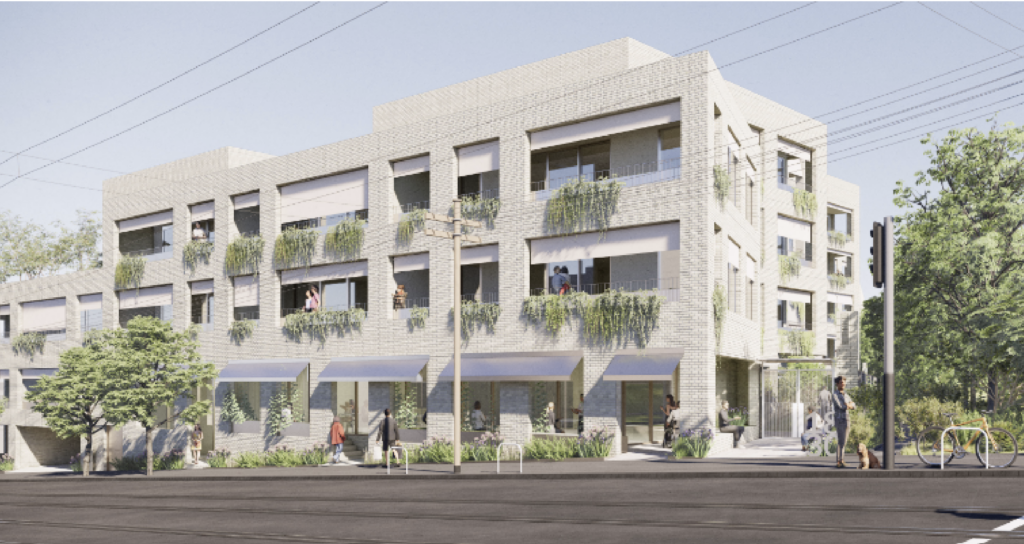
The State Design Book
The State Design Book accompanies the Great Design Fast Track and showcases the types of housing the Victorian Government considers to represent good design, liveability and sustainability.
Part 1: Design Principles sets out the seven Government-defined principles used to assess projects seeking access to the pathway, focusing on low-rise and mid-rise housing up to eight storeys.
Part 2: Community Choice showcases 28 housing projects selected by an expert panel from 129 nominations submitted by around 170 participants across Victoria. The Government presents the publication as illustrating “what Victorians value in housing”, although the examples are drawn from a small community nomination process rather than a representative survey of Victorian opinion.
For more information: View the State Design Book
Do the new planning Codes support “great design”?
The State Design Book principles paint an attractive picture of Melbourne’s future. The planning rules tell a different story.
To qualify for the Great Design Fast Track, developments must demonstrate seven Government-defined principles of “great design”, including Neighbourly Homes, Landscaped Homes, Sustainable Homes and Healthy Homes.
These principles promote neighbourhood identity, nature connection, sustainability and homes that contribute positively to their local environment.
Yet the same Government is simultaneously rolling out the Townhouse & Low-Rise Code and Mid-Rise Code across Victoria. These codes reduce setbacks, shrink garden areas, limit deep soil and make it harder to retain mature trees — the very ingredients that help create the kinds of neighbourhoods the State Design Book promotes.
The contradiction is difficult to ignore.
Good design depends on more than architecture. It depends on planning rules that leave enough space for trees, gardens, sunlight and buildings that respond to their surroundings.
If the planning rules progressively erode the very qualities that make Melbourne’s established suburbs attractive, can they realistically deliver the greener, leafier and more liveable neighbourhoods the Government’s own design principles aspire to achieve?
What this means for Melbourne
The Great Design Fast Track is part of a broader shift towards faster, more centralised planning approvals across Victoria.
It concentrates decision-making in the hands of the Minister for Planning, allows local planning controls to be varied or overridden, and reduces opportunities for councils and communities to influence outcomes.
While presented as a pathway for “great design”, it raises a broader question: should a single state-appointed assessment determine whether developments receive special planning concessions unavailable through the standard planning system?
Explore related topics
You may also be interested in:
- View the Victorian Government State Design Book
- Government plans → Future Homes Program
Explains how Government-supported apartment designs form part of the broader Great Design Fast Track initiative. - Government plans → Townhouse & Low-Rise Code
Explores the new Code and why it makes many of the State Design Book’s own design principles harder to achieve. - Government plans → Mid-Rise Code
Explores the new Code and why it makes many of the State Design Book’s own design principles harder to achieve. - What we want → Place-Based planning
Our vision for planning that responds to the unique character, landscape and needs of each neighbourhood rather than a one-size-fits-all approach.