
Can infrastructure keep pace?
The same infrastructure. More people. Unless infrastructure grows at the same pace as housing, every school, park, road, hospital and community facility must serve more people. If the Government has evidence that existing and planned infrastructure can accommodate the scale of growth proposed, Victorians deserve to see it.
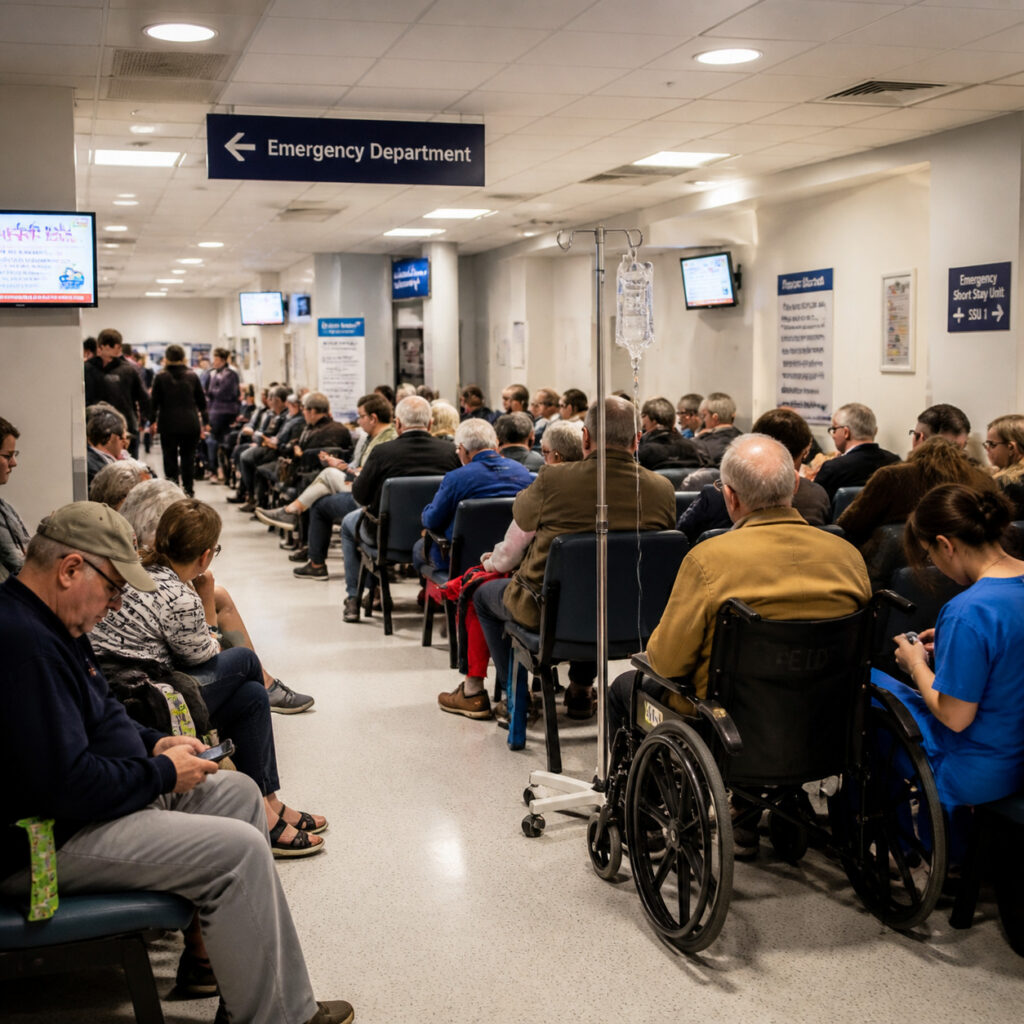
Housing growth requires more than homes. In Boroondara alone, the Government’s housing target is 135,500 dwellings by 2051 — an increase of 65,500 dwellings and almost 90% more than exist today. Growth on this scale will inevitably require additional infrastructure and greater capacity across transport, schools, hospitals, parks, utilities and community facilities.
The Government says growth will be directed to locations with the infrastructure to support it. But the existence of infrastructure is not the same as having the capacity to accommodate substantial population growth.
This page examines what publicly available evidence has been released to demonstrate that existing infrastructure can support the scale of growth being proposed, what additional infrastructure will be required, and when it will be delivered.
At a glance
- Housing growth requires more than new homes. It also requires transport, schools, hospitals, parks, utilities and community facilities.
- The existence of infrastructure does not necessarily mean it has the capacity to accommodate the scale of growth proposed under the Activity Centres Program.
- Some infrastructure can be expanded over time, but new parks, schools and sporting facilities often depend on land that is increasingly difficult to acquire in established suburbs.
- The Government’s Infrastructure Contribution Plan (ICP) does not ensure that the infrastructure upgrades needed to support housing growth will be fully funded or delivered when communities need them.
- Once the available ICP funding is spread across multiple Boroondara activity centres and decades of growth, the contribution towards each community’s infrastructure is very small compared with the scale of infrastructure required.
- The infrastructure assessments underpinning these planning changes have still not been publicly released.
- Communities deserve to understand whether infrastructure can accommodate the proposed growth, how it will be funded, and when it will be delivered.
Infrastructure underpins liveability
Housing does not exist in isolation. Every new home increases demand for transport, schools, childcare, health services, parks, sporting facilities, community centres, water, sewerage, drainage, electricity and other essential infrastructure.
In established suburbs, accommodating this growth presents particular challenges.
Much of the existing infrastructure was designed many decades ago for lower-density neighbourhoods, and expanding its capacity can be difficult where land is already heavily developed.
Unlike new suburbs, where infrastructure can be planned and delivered alongside housing, established areas often have limited opportunities to widen roads, build new schools, acquire additional parkland or expand utility networks.
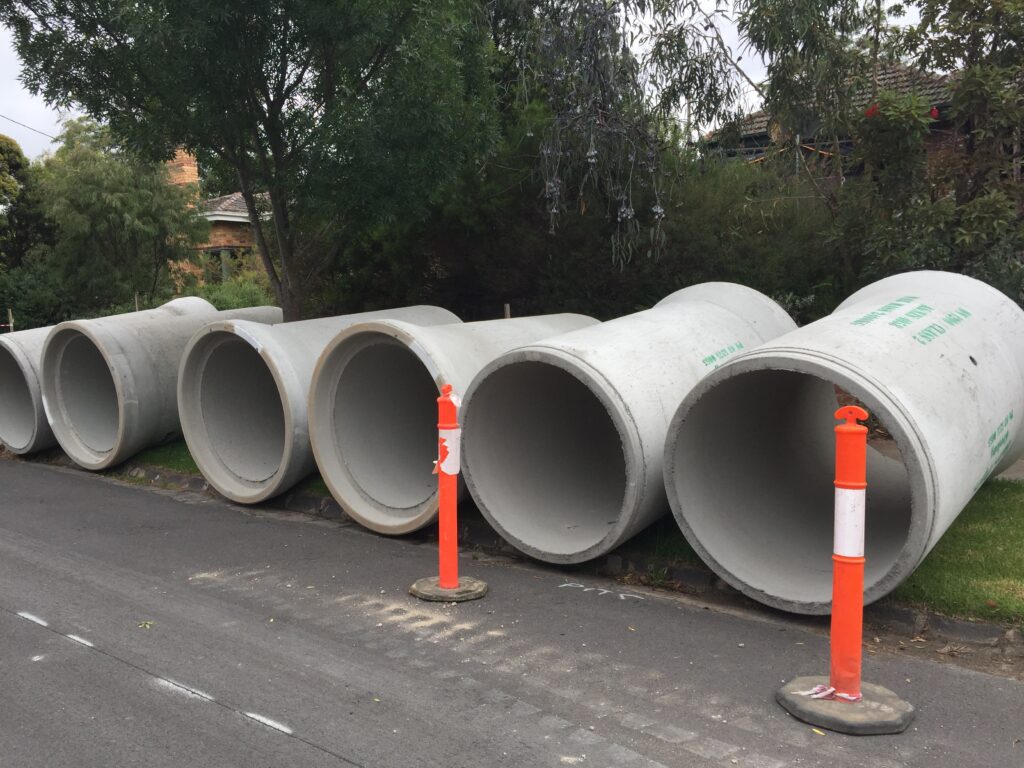
As more people rely on the same infrastructure, the level of service available to each resident can gradually decline, even where the infrastructure itself remains unchanged.
The illustrations below show how everyday community facilities can experience increasing pressure as more people rely on the same infrastructure.
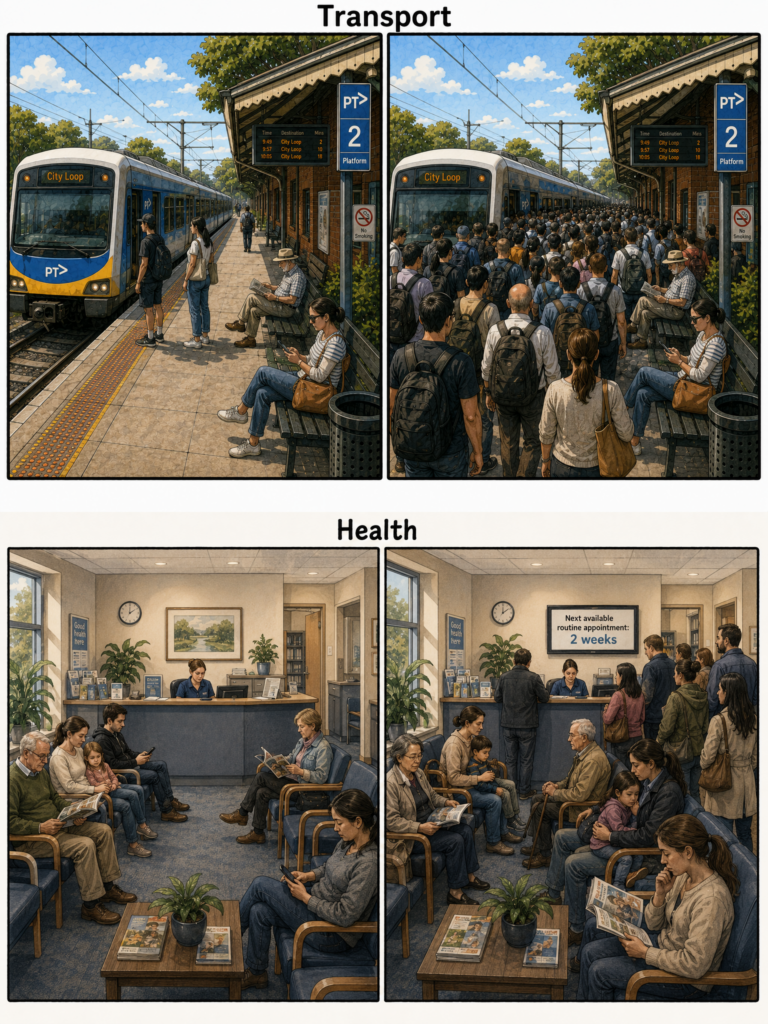
Protecting liveability means planning homes and infrastructure together, not treating them as separate issues. The Government’s planning changes prioritise housing delivery, while the evidence that infrastructure will keep pace has not been publicly released.
Who pays?
More homes require more infrastructure and infrastructure costs money. Roads, parks, sporting facilities, community centres and other public assets all require significant investment to build, upgrade and maintain.
Under the Victorian Government’s Infrastructure Contribution Plan (ICP), developers contribute $11,350 for each additional dwelling. Around two-thirds of this contribution ($7,567) is allocated to councils for local infrastructure, with the remaining third directed to the Victorian Government for state infrastructure.
The Government has indicated these contributions may help fund infrastructure such as roads, shared paths, parks, community facilities, public transport infrastructure and schools. However, the ICP identifies categories of infrastructure rather than the specific projects that will be delivered.
At first glance, the Infrastructure Contributions Plan may sound substantial, but Boroondara Council’s share must be spread across seven activity centres, 25 years of growth and the full range of infrastructure growing communities require.
Once divided across multiple centres and decades of development, the amount available to each community is small compared with the scale of infrastructure required.
The question is not whether the ICP will contribute to infrastructure, but whether it will contribute enough.
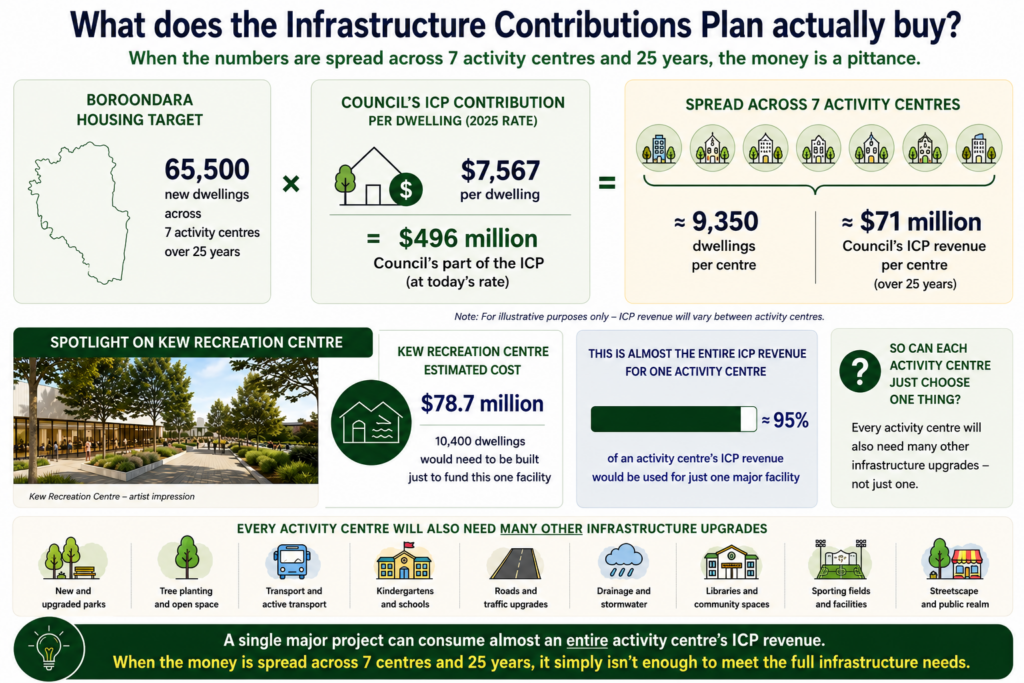
The comparison above illustrates how quickly infrastructure contributions can be absorbed by a single major community project.
For example, Boroondara’s Kew Recreation Centre is budgeted to cost $78.7 million. At the current local council contribution of approximately $7,567 per dwelling, it would take contributions from around 10,400 additional dwellings to generate an equivalent amount.
Based on today’s Infrastructure Contributions Plan rates, the Council’s share of ICP revenue generated by one activity centre would be roughly enough to fund a single major project such as the proposed Kew Recreation Centre.
Yet every activity centre will require a broad range of infrastructure — not just one facility. Communities will also need upgraded parks, drainage, sporting facilities, libraries, community spaces, streetscape improvements, transport upgrades and open space.
While infrastructure contributions are not intended to fund every project in full, this comparison illustrates the scale of investment required to support growing communities. For more information, see Government plans → Activity Centres Program.
If infrastructure costs exceed the contributions collected, the remaining funding must come from somewhere else. That may include existing council budgets, additional state government investment or, ultimately, taxpayers and ratepayers.
Questions remain about:
- Who pays for infrastructure upgrades?
- When upgrades will be delivered relative to development?
- Whether contributions from developers are sufficient?
- How impacts are prioritised across different suburbs?
This uncertainty increases the risk of infrastructure lagging behind population growth.
A question to consider
If one major community facility requires revenue equivalent to almost an entire activity centre’s ICP contribution over 25 years, how will the full range of infrastructure required by growing communities be funded?
Some infrastructure cannot simply be added later
Where can major new facilities be physically located in already established suburbs?
Accommodating more homes does not automatically create the schools, parks, sporting facilities and community spaces that growing neighbourhoods also require.
In established suburbs, these facilities often depend on something that cannot easily be created: land. While buildings can be extended and services expanded over time, finding suitable sites for a new school, sporting reserve, community facility or major park is far more difficult once an area is largely developed.
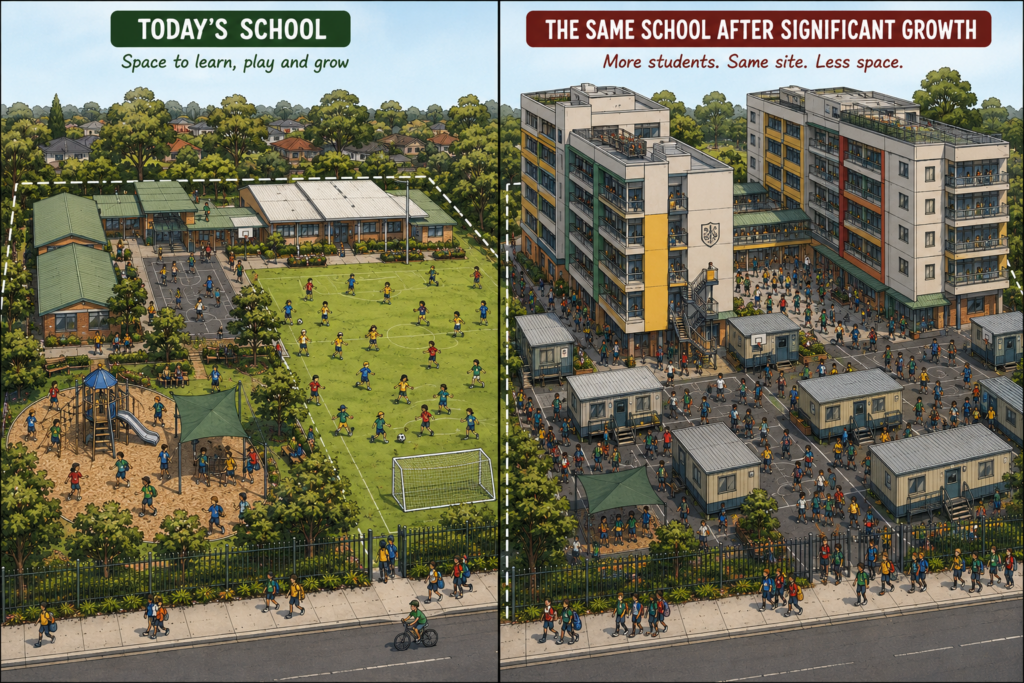
Infrastructure Victoria has acknowledged these challenges. Meeting future demand may involve expanding existing schools, using relocatable classrooms, building vertical schools or, where necessary, acquiring land for entirely new sites. In established municipalities, however, acquiring land of this scale can be difficult and expensive.
A question to consider
Where will the land for new community infrastructure come from?
Can existing infrastructure cope?
The existence of infrastructure is not the same as having spare capacity. Population growth driven by rapid housing expansion will also increase demand for local services.
Key services include:
- Transport networks (roads, rail, and public transport capacity).
- Schools and early childhood services.
- Libraries and local community facilities.
- Hospitals and health infrastructure.
- Parks, sporting facilities, and public open space.
- Water, drainage, and utility networks.
These services were designed to meet the needs of the people who already live in an area.
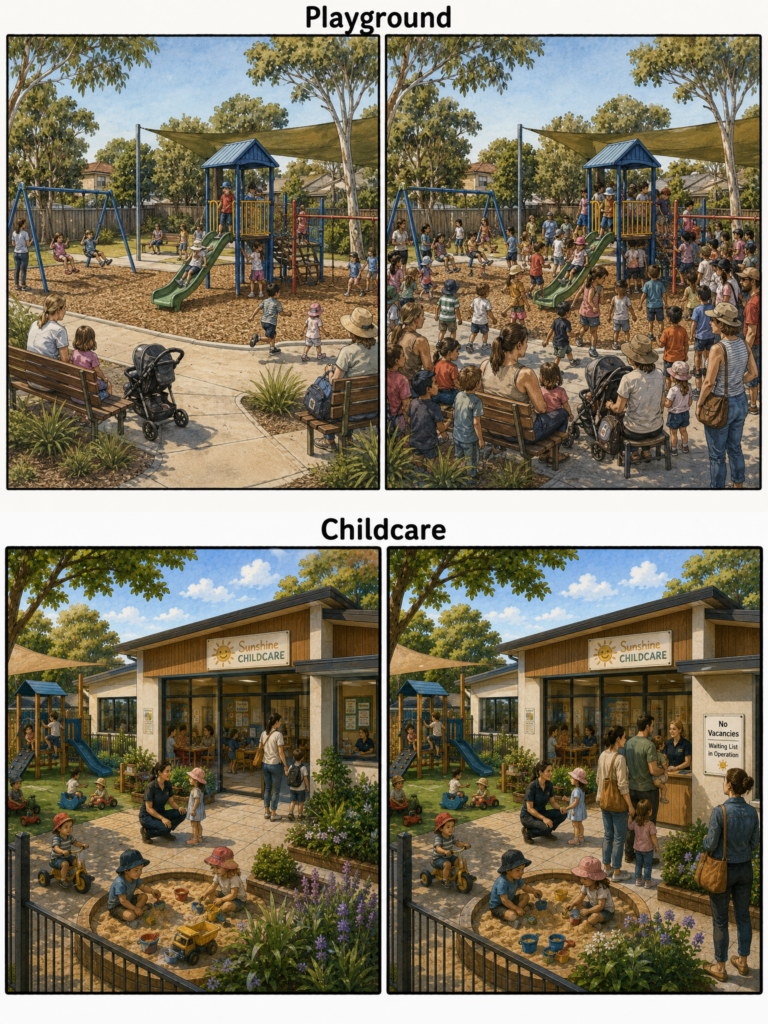
While some may have capacity to accommodate additional demand, others may already be operating close to their limits. Without coordinated upgrades, population growth will place increasing pressure on existing infrastructure.
This is why broad statements that infrastructure already exists do not answer the more important question: can it accommodate the planned population growth?
For example, government school utilisation in Boroondara varies considerably. Some schools have spare capacity, while others are already operating close to or above their intended enrolment capacity (for example, Auburn High School).
The same principle applies across many types of infrastructure. Capacity is local and cannot be assumed.
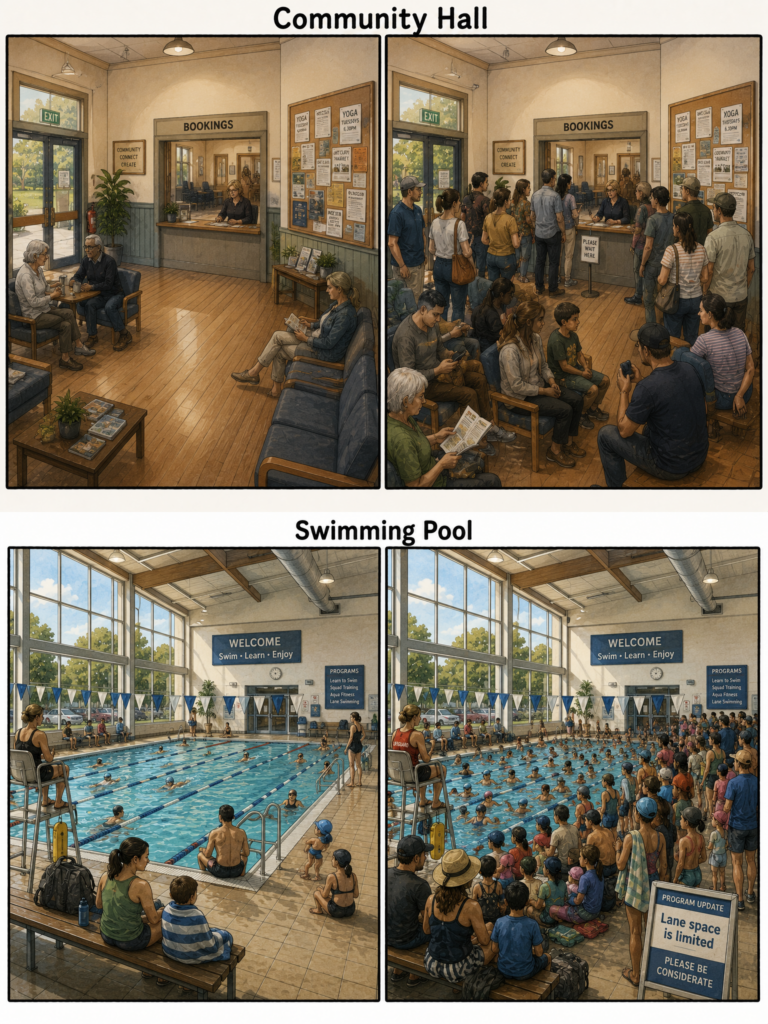
The challenge is also cumulative. While individual developments may appear manageable, the Activity Centres Program proposes significant growth across dozens of established suburbs simultaneously.
Many infrastructure networks, particularly hospitals, transport systems and regional sporting facilities, are shared across municipal boundaries. Their capacity cannot be assessed by looking at individual activity centres in isolation.
A question to consider
Has the Government demonstrated that existing infrastructure can accommodate the additional population proposed for each activity centre?
Can open space keep pace with growth?
Higher-density neighbourhoods require adequate public open space to maintain liveability and wellbeing. As more people live in apartments and smaller homes with limited private gardens, parks, sporting reserves and other green spaces become increasingly important for recreation, exercise, social connection and contact with nature.
As Melbourne grows, however, each hectare of public open space must serve more people. Unless additional parks are provided alongside new housing, existing open space becomes increasingly crowded, sporting facilities come under greater pressure and access to green space declines on a per capita basis.
While the Victorian Government has stated that additional open space will be provided in activity centres, creating substantial new parks in established suburbs presents significant practical challenges. As discussed earlier, acquiring suitable land is often difficult and expensive.
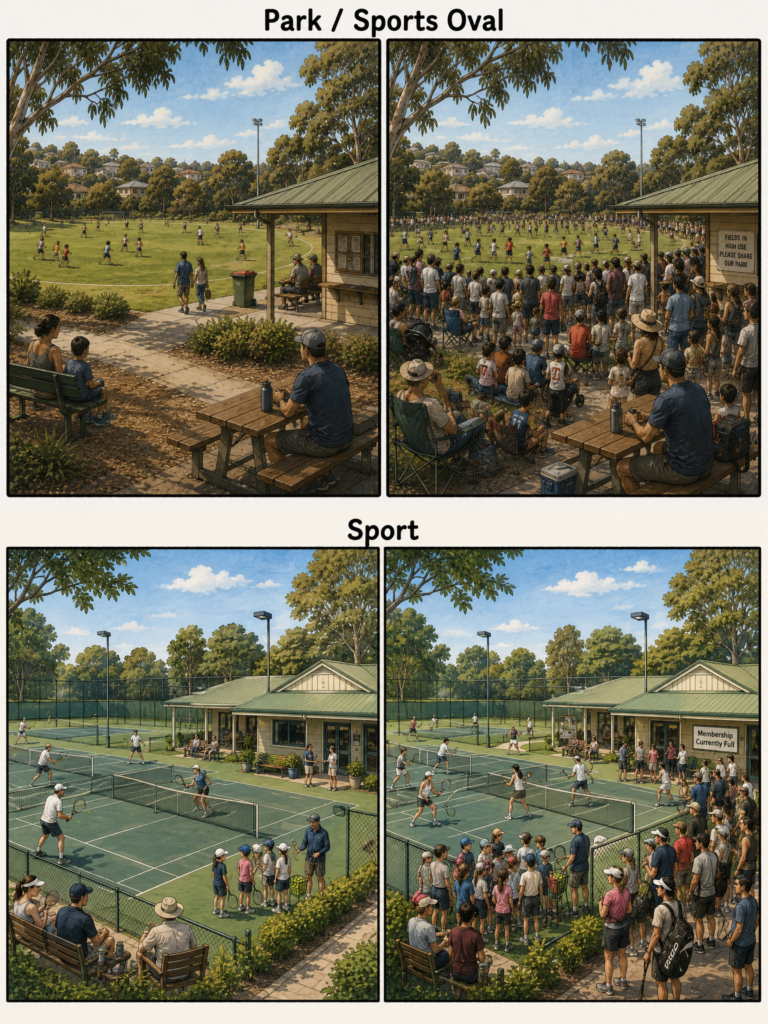
Land constraints mean that new parks in established suburbs are most likely to be pocket parks serving relatively small local populations, while creating larger parks will require the acquisition of multiple residential properties.
The diagram below shows the approximate cost of acquiring land for different park sizes, together with the approximate number of new dwellings that would be required to cover the cost of land acquisition under the Victorian Government’s Infrastructure Contributions Plan (ICP). The ICP was discussed earlier on this page.
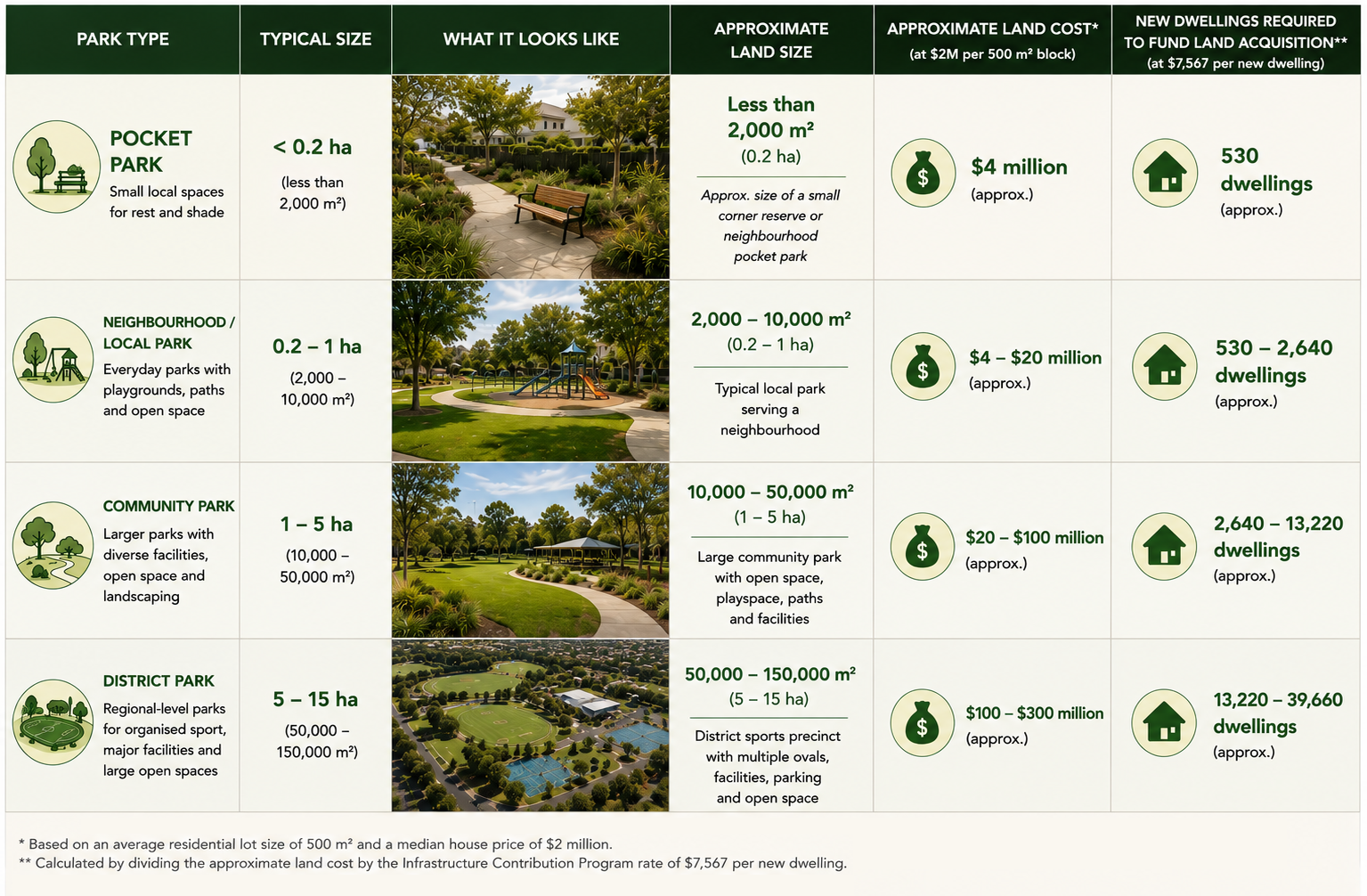
Population growth also places increasing pressure on the parks and sporting reserves that already exist. More residents may increase demand for organised sport, leading to additional facilities, larger clubrooms, hard courts or synthetic playing surfaces.
While these changes can increase sporting capacity, they may also reduce the amount of green open space available for informal recreation, replace permeable surfaces, alter the character of public parks and diminish their environmental benefits.
In some areas, the only green spaces are sports reserves.
Recent planning decisions also highlight the competing demands for scarce urban land.
Sites communities identify as opportunities for future parkland are increasingly being prioritised for housing. For example, Whitehorse Council and local residents sought to preserve the former brickworks site in Box Hill as public open space, but the Planning Minister instead approved its redevelopment for housing.
A question to consider
As private gardens become smaller and neighbourhood populations grow, where will future generations find the open space they need for recreation, organised sport and contact with nature?
Infrastructure beyond the activity centre
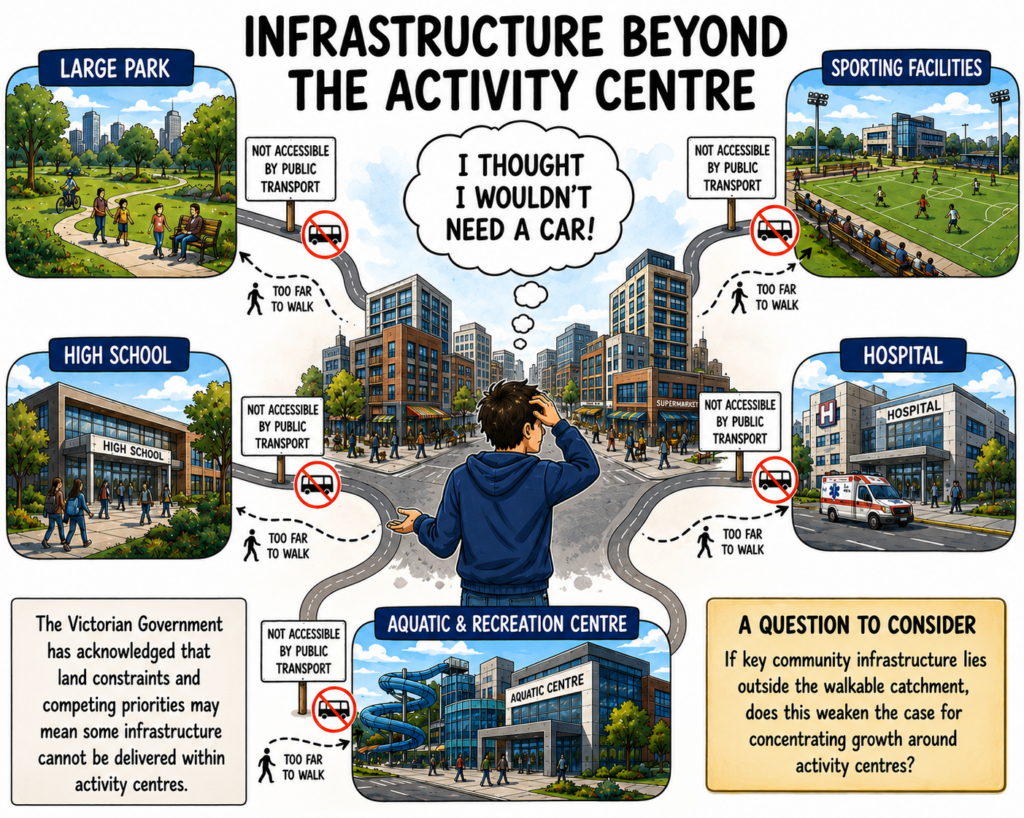
The Victorian Government has acknowledged that land constraints and competing priorities may mean some infrastructure cannot be delivered within activity centres and may instead need to be provided elsewhere.
This raises an obvious question. If residents must travel beyond the walkable catchment to access parks, sporting facilities or other community infrastructure, can activity centres genuinely provide most of the services needed for daily life?
And if that infrastructure is not accessible by public transport, how will people reach it?
Rather than resolving the challenge, delivering infrastructure elsewhere may simply transfer it to surrounding neighbourhoods, where those facilities must also have the capacity to accommodate additional demand.
Will existing parks and sporting facilities outside the activity centre have capacity for thousands of additional users?
A question to consider
If key community infrastructure lies outside the walkable catchment, does this weaken the case for concentrating growth around activity centres?
Where is the infrastructure evidence?
The Victorian Government has repeatedly stated that infrastructure planning has informed the Activity Centre Program. Yet the detailed assessments underpinning these decisions have not been released publicly.
During the 2025 Parliamentary Inquiry into Victoria Planning Provisions amendments, Government representatives referred to infrastructure assessments prepared for the activity centres. However, these assessments have still not been made publicly available despite being formally sought by the inquiry committee (see below). More than a year later, these analyses and reports remain unavailable to councils, communities and the public. (Read Inquiry Report)
FINDING 1: The Committee finds that the Department of Transport and Planning and other agencies of government have not provided requested materials and background documents sought by the Committee during this inquiry and that the explanations are not accepted.
Recommendation 1: The Department of Transport and Planning and other agencies are required by the Committee to provide all sought documents and materials. If these are provided after the Committee has reported, the Committee Secretariat place these documents on the Committee’s website for at least 2 months to make them available to the community and council.
Without access to this information, councils, communities and independent experts cannot assess whether existing infrastructure has sufficient capacity, what additional infrastructure will be needed, how it will be funded, or when it will be delivered.
For planning changes that will reshape established suburbs for decades to come, this level of transparency should not be optional. If the evidence exists, Victorians should be able to see it.
A question to consider
If the Government is confident that existing and planned infrastructure can support the proposed growth, why has it fought to keep the supporting analysis from public scrutiny?
A strategic policy choice
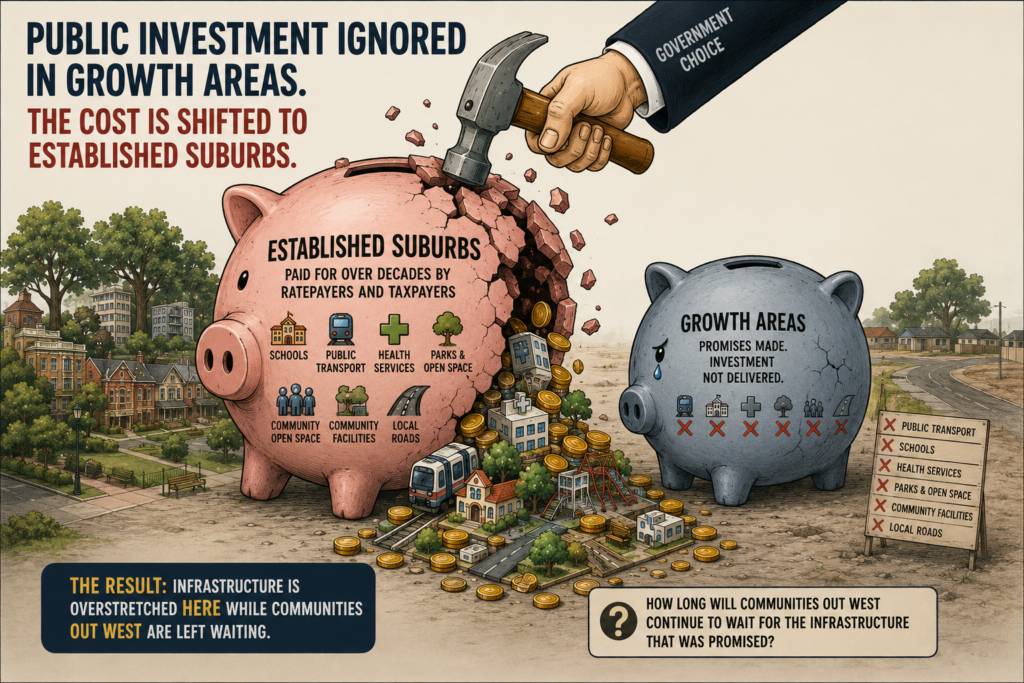
For many years, governments of all political persuasions have approved rapid population growth in Melbourne’s greenfield suburbs without delivering infrastructure at anywhere close to the same pace. Despite repeated promises, many newer communities continue to experience shortages of public transport, localised freeway on-ramps, schools, health services, parks and community facilities.
Rather than first addressing this infrastructure shortfall, the Victorian Government has chosen to direct a much greater share of future housing growth (70%) into established suburbs, arguing that these areas already have the infrastructure needed to support additional population.
This is a significant policy choice.
Directing more growth into established suburbs allows greater use of infrastructure that has largely been funded by generations of taxpayers and ratepayers. The question is whether those assets were designed to accommodate the additional population now proposed.
This also raises an important policy question.
If existing infrastructure in established suburbs is increasingly relied upon to accommodate population growth, does this reduce the urgency to provide the transport, schools, parks and community facilities that have long been promised to Melbourne’s newer communities?
Why this matters
Infrastructure is not optional. It is what makes growth functional and liveable.
Without adequate planning and investment, increased density can lead to:
- Longer commute times.
- Reduced access to services.
- Lower quality and overcrowding of public amenity.
- Declining overall liveability.
In other words, housing supply alone is not enough without the systems that support it.
What this means for Melbourne
The current planning changes prioritise the rapid delivery of housing, but do not clearly demonstrate how infrastructure will be delivered at the same pace and scale.
If infrastructure planning continues to lag behind development approvals, Melbourne risks a pattern of growth where more people live in an area but services and infrastructure do not keep pace.
Sustainable growth requires alignment between housing and infrastructure, not one advancing significantly ahead of the other.
Infrastructure is fundamental to liveable communities. If existing infrastructure can accommodate the scale of growth proposed, the Government should be able to demonstrate this through publicly available evidence. If additional infrastructure will be required, communities deserve to know what will be built, when it will be be delivered and how it will be funded.
Explore related topics
These planning issues are closely connected. You may also be interested in:
- Concerns → Traffic and congestion
Can existing roads and public transport cope with the proposed growth? - Government plans → Car parking changes
Will reduced parking requirements simply shift more cars onto suburban streets? - Government plans → Activity Centres Program
How the Activity Centres Program proposes to reshape established suburbs — and the infrastructure questions it raises.