
Traffic and congestion
For many Boroondara residents, traffic congestion is already a daily frustration. Planning for thousands of additional homes without demonstrating how the transport network will accommodate the resulting travel demand risks reducing liveability for existing and future residents alike.
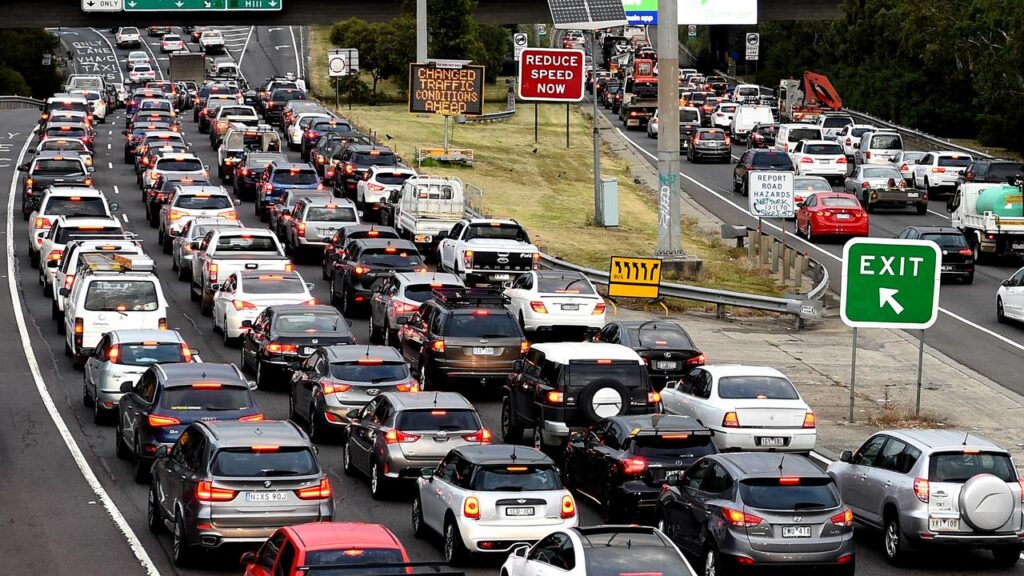
Few Boroondara residents need convincing that traffic congestion is already part of daily life, particularly during peak periods and school drop-off and pick-up times.
Victoria’s planning changes will substantially increase housing in many established suburbs. As more people move into established neighbourhoods, an obvious question follows: how will existing roads, intersections and public transport cope with additional travel demand?
At a glance
- Many established suburbs already experience significant traffic congestion during peak periods.
- More residents generally generate more demand for roads and public transport.
- Established suburbs often have limited capacity to significantly expand their existing road networks.
- Congestion on major roads can increase rat-running through residential streets.
- Planning changes that reduce parking requirements may increase pressure on surrounding residential streets.
- Sustainable growth requires housing and transport infrastructure to be planned together.
More residents, more travel, same street network
Transport planning is about more than whether a road or railway exists. It is about whether it has the capacity to accommodate additional demand.
Many of Melbourne’s established suburbs developed around neighbourhood schools, local shopping strips and relatively low-density housing. These areas already experience significant peaks in traffic during morning and afternoon peak periods and around school drop-off and pick-up times.
Victoria’s planning changes will accommodate substantially more residents within many of these established neighbourhoods. As populations increase, so too does demand for transport. While walking, cycling and public transport will accommodate some of this additional demand, many people will continue to rely on private vehicles for at least some of their daily travel.
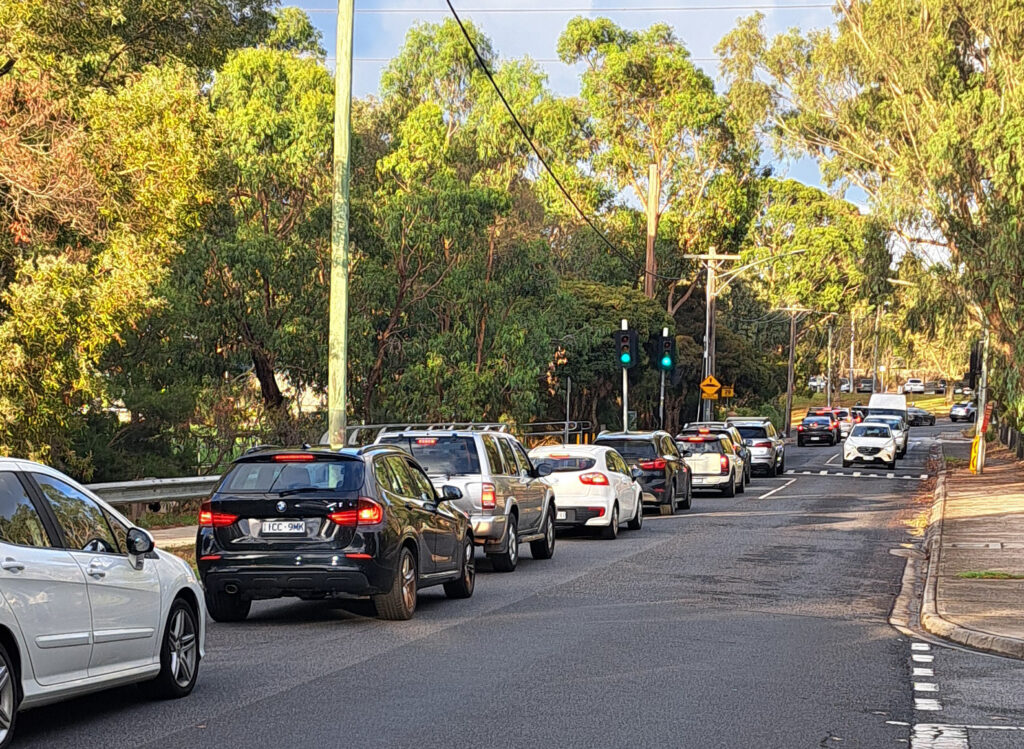
Many daily journeys do not begin or end at a train station or tram stop. Parents dropping children at school, tradespeople travelling between jobs, carers, health workers, shopping trips, sporting commitments and visits to family or friends often require travel across suburbs where public transport is less direct, less convenient or, in some cases, impractical.
Unlike newer growth areas, many established suburbs have little capacity to significantly expand their road network. As a result, additional travel demand must largely be accommodated on the same streets and at the same intersections that already serve existing communities.
This may result in:
- Increased traffic on local roads.
- Greater pressure on already busy intersections.
- Longer travel times during peak periods.
- More competition between through-traffic and local access.
- Increased pressure on arterial roads and freeway access points.
- Increased pressure on public transport services.
Although targeted improvements such as intersection upgrades or traffic signal changes may improve traffic flow in some locations, many established suburbs have limited scope to significantly increase the overall capacity of their road networks.
A question to consider
What evidence shows that the existing transport network has the capacity to accommodate the additional travel demand these reforms are expected to generate?
Rat-runs through residential streets
As congestion increases on major roads, drivers often seek alternative routes through quieter residential streets. Navigation apps can reinforce this behaviour by directing motorists along local roads to avoid delays on arterial routes.
Residential streets are not simply transport corridors. Residential streets are places where people live. They are places where people walk, cycle, meet neighbours, access schools and parks, and go about their daily lives. They are designed primarily to provide access for local communities, not to function as alternative arterial roads.
Many Boroondara residents already experience this during peak periods. In Ashburton, for example, Dent Street is frequently used by motorists seeking to avoid congestion on High Street. Similarly, during peak periods, drivers often divert from Canterbury Road through residential streets such as Broadway in Camberwell. Residents can experience lengthy delays leaving these streets as traffic queues build at surrounding intersections.
Increased shortcutting can lead to:
- Longer delays for residents entering or leaving their driveways and streets.
- Increased traffic around neighbourhood schools.
- Greater safety risks for children, pedestrians and cyclists.
- Higher noise levels and reduced residential amenity.
- More congestion at local intersections.
Residential streets are designed primarily to provide access for local communities, not to function as alternative arterial roads. As traffic volumes increase, so too can the impacts on safety, noise and neighbourhood amenity, changing the everyday character of the places where people live.
Car parking pressure
Parking is closely linked to traffic and congestion. As discussed in Government plans → Car parking changes, the planning changes reduce minimum parking requirements in many locations on the assumption that households will rely more heavily on public transport, walking and cycling.
If travel behaviour does not change as anticipated, parking demand may instead shift from private developments onto surrounding residential streets. This has the potential to increase pressure on neighbourhoods that are already experiencing growing traffic volumes and limited on-street parking.
This may result in:
- Increased demand for on-street parking.
- Spillover parking into surrounding residential streets.
- Reduced parking availability for existing residents and visitors.
- Greater competition for limited kerbside parking.
Public transport
The planning changes assume that more people will rely on public transport by concentrating housing around activity centres and railway stations.
Achieving this objective, however, depends on public transport having sufficient capacity, frequency and reliability to accommodate additional passengers.
While public transport provides an efficient way to travel for many journeys, particularly to central Melbourne, it is not equally practical for every trip. Many everyday journeys occur between suburbs rather than into the CBD and may require multiple connections, longer travel times or reliance on local bus services.
In parts of Boroondara, public transport options are also constrained by existing infrastructure. For example, Ashburton is served by the single-track Alamein railway line and has no tram service, meaning many cross-suburban journeys continue to rely primarily on buses or private vehicles.
As population increases, this may result in:
- Increased demand for train, tram and bus services.
- More crowded peak-hour services.
- Greater pressure on stations and interchanges.
- Reduced reliability and passenger comfort if services do not keep pace with demand.
Improving public transport can reduce reliance on private vehicles, but this depends on services being frequent, reliable and well suited to the way people actually travel.
Construction impacts
As established suburbs undergo redevelopment, increased traffic is not limited to completed developments. The construction process also places additional pressure on local streets and surrounding neighbourhoods.
Residents may experience:
- Increased heavy vehicle movements, including concrete trucks and delivery vehicles.
- Temporary lane closures and traffic disruptions.
- Greater demand for on-street parking by construction workers.
- Noise, dust and reduced pedestrian access around building sites.
Where multiple developments occur within the same area over an extended period, these impacts can continue for many years before redevelopment is complete.
Why this matters
Traffic and congestion are more than everyday inconveniences. They influence how people move through their communities and affect the liveability of established suburbs.
They can affect:
- Travel times and journey reliability.
- Access to schools, healthcare, shops and employment.
- Safety for pedestrians and cyclists.
- Local businesses and service deliveries.
- Residential amenity, including noise and air quality.
- Emergency service access during peak periods.
Well-planned growth considers not only how many homes can be built, but also whether the surrounding transport network can continue to function effectively as communities grow.
What this means for Melbourne
Transport is not just about moving vehicles. It is about getting children safely to school, reaching work on time, visiting family, accessing healthcare and enjoying the places where we live. Good planning should ensure these everyday journeys become easier, not more difficult, as Melbourne grows.
Without timely investment in roads, intersections, public transport and active transport infrastructure, additional housing is likely to place increasing pressure on networks that are already operating close to capacity in many established suburbs.
If Melbourne’s established suburbs are expected to accommodate substantially more residents, what transport infrastructure will be provided to ensure existing congestion does not simply become worse?
Explore related topics
These planning issues are closely connected. You may also be interested in:
- Government plans → Car parking changes
Will reducing parking requirements simply shift more cars onto suburban streets? - Concerns → Can infrastructure keep pace?
Transport is only one part of the infrastructure challenge. Can schools, parks, hospitals and community facilities also keep pace?