
Car parking changes
Reducing car parking does not reduce the need to travel. The planning changes assume people will change how they move around Melbourne, but many everyday journeys still depend on a car. The reality is that people’s lives extend well beyond a single neighbourhood, with work, education, shopping and family responsibilities often requiring travel to multiple destinations in a single trip.
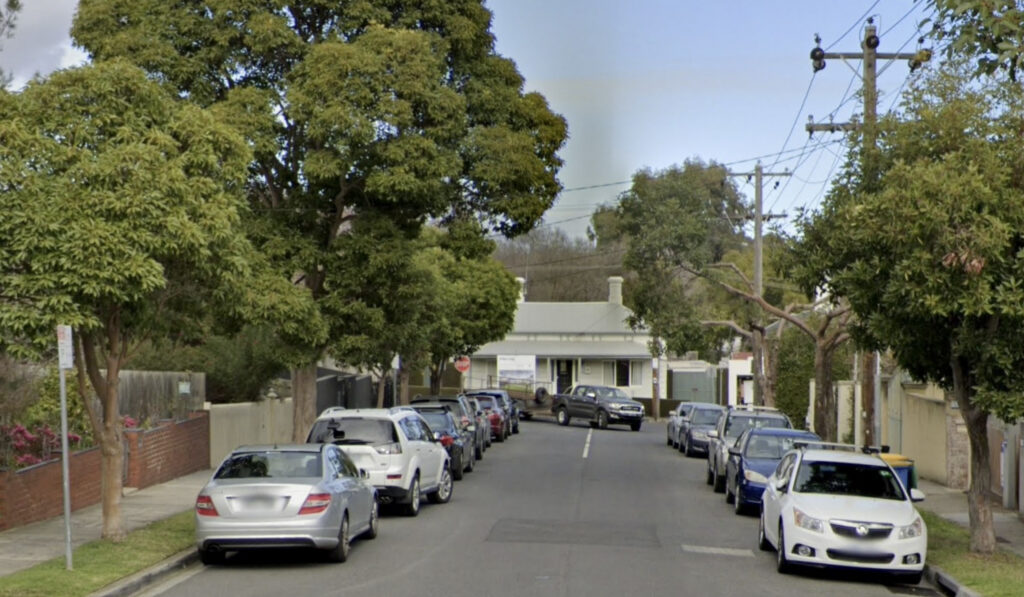
The Victorian Government has introduced significant changes to car parking requirements through amendments VC277 and VC311.
The changes reduce minimum car parking requirements in many locations and introduce maximum parking limits in some areas, restricting the amount of parking that can be provided even if a developer or future residents would prefer additional parking.
The Government says these changes will encourage greater use of public transport, walking and cycling by reducing reliance on private vehicles. It also argues the changes will reduce development costs, support housing growth and give purchasers more choice by allowing people who do not own a car to avoid paying for parking they may never use.
The changes are based on the assumption that people living close to public transport will own fewer cars and increasingly rely on trains, trams, buses, walking and cycling. Critics argue that this overlooks the complexity of everyday life, where work, education, shopping, caring responsibilities and other commitments often involve multiple destinations that cannot always be reached conveniently by public transport.
At a glance
- New statewide planning rules reduce minimum car parking requirements for many developments. In some locations, maximum parking limits also restrict how much parking can be provided.
- In areas considered highly accessible by public transport, apartment developments may be approved with no minimum requirement to provide car parking.
- Parking requirements are based largely on public transport accessibility, but proximity to a train, tram or bus does not necessarily make public transport practical for the varied and multi-stop journeys people make every day.
- If reduced parking provision does not lead to lower car ownership, the result may be greater competition for limited on-street parking rather than fewer cars.
How the new parking rules work
The Victorian Government has linked minimum parking requirements to public transport accessibility. As accessibility increases, the minimum number of parking spaces required decreases. In areas with the highest public transport accessibility, apartment developments may now be built with no minimum parking requirement.
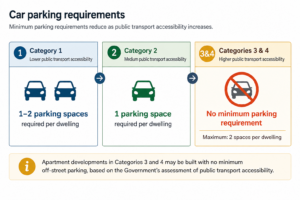
These requirements are based on the Government’s assessment of public transport accessibility, not on the travel needs of individual households.
Do fewer parking spaces mean fewer cars?
The success of these changes depends on whether public transport, cycling and walking provide realistic alternatives to driving in everyday life.

Travel needs vary considerably between households. Older residents, families with young children, tradespeople, shift workers, carers and people with disabilities may continue to rely heavily on private vehicles, even where public transport is available.
While public transport works well for many journeys, others may require multiple connections, longer travel times or services that do not align well. Many everyday trips — such as travelling between suburbs, transporting children, reaching workplaces not well served by public transport or visiting regional areas — can still be considerably quicker and more practical by car.
Will reducing parking reduce car ownership?
The changes assume that reducing parking provision will encourage households to own fewer cars. Critics argue that this may not always occur.
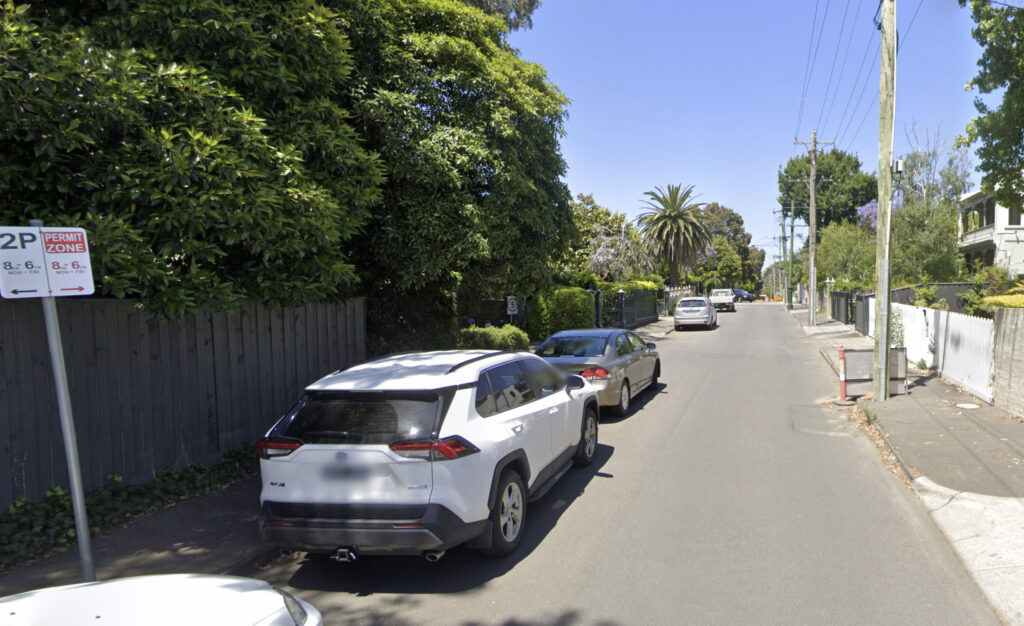
Where apartment developments provide little or no off-street parking, residents may instead compete for already limited on-street parking.
This can increase parking pressure in surrounding residential streets and transfer parking demand from private land onto public roads.
While lower parking requirements may reduce construction costs, their long-term success depends on whether travel behaviour changes in practice.
Public transport accessibility maps
Many developments located close to trains and trams no longer have to provide any minimum number of car parking spaces. Parking requirements are now largely determined using state-wide public transport accessibility maps rather than local parking policies.
The maps assess factors such as the availability, frequency and quality of public transport services. However, they measure proximity to public transport rather than whether it provides a practical alternative for the journeys people actually make.
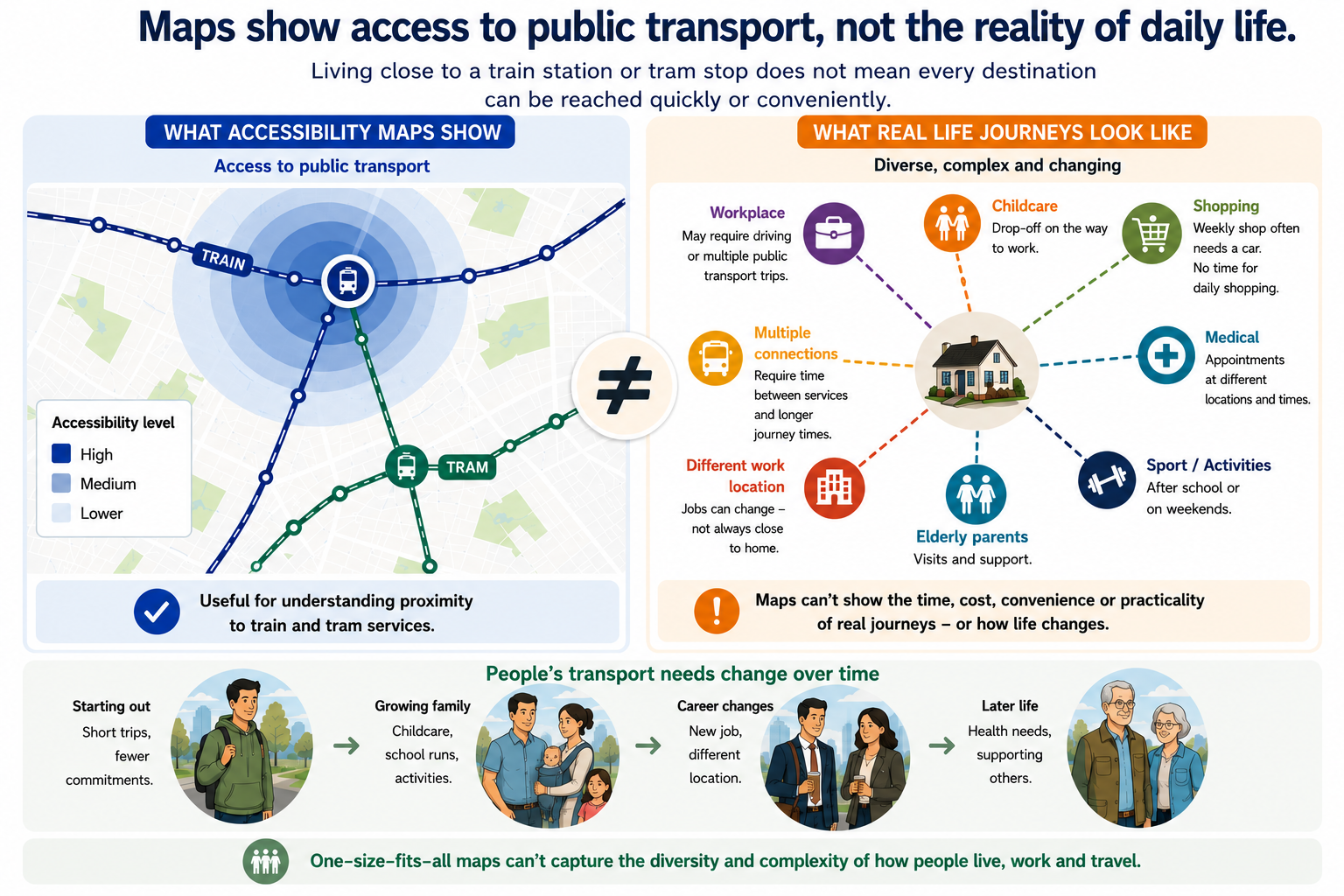
Living close to a train station or tram stop does not mean every destination can be reached quickly or conveniently. Public transport accessibility maps provide a useful measure of access to public transport, but they cannot reflect the diversity of people’s travel patterns. They do not account for the convenience of particular journeys, the need for multiple connections, changing work locations or evolving family circumstances that influence how people travel throughout their lives.
Activity centres serve much wider catchments than the areas identified on the maps. Many people travel from well beyond walking distance for shopping, dining, healthcare and other services, yet their parking needs are not reflected by mapping based solely on the location of new development.
Boroondara Council supports reducing parking where public transport access is genuinely strong, but has argued that the State Government’s mapping does not always reflect local conditions and should be refined over time.
What this means for Melbourne
Walkable neighbourhoods are an important planning objective, but planning must also reflect how people actually live. Modern life extends well beyond a single neighbourhood, and many journeys between suburbs or across Melbourne cannot easily be completed on foot or by public transport.
Reducing parking requirements may encourage more sustainable travel in some locations. However, if car ownership remains relatively high, it may simply shift parking demand from private developments onto surrounding residential streets.
The real question is whether planning should be based on how governments hope people will travel, or how many Victorians actually travel today.
Explore related topics
These planning issues are closely connected. You may also be interested in:
- Concerns → Traffic and congestion
Explore how reduced parking requirements may affect surrounding residential streets and local traffic conditions. - Concerns → Can infrastructure keep pace?
Parking is just one part of the wider infrastructure challenge created by rapid residential growth.