
Heritage and neighbourhood character
Melbourne’s suburbs are not blank canvases waiting to be redeveloped. They are the product of generations of planning, investment and community care. Once their distinctive character is lost, it cannot simply be rebuilt. Good planning should help neighbourhoods evolve, not replace the qualities that made them worth living in. What kind of city do we want future generations to inherit?
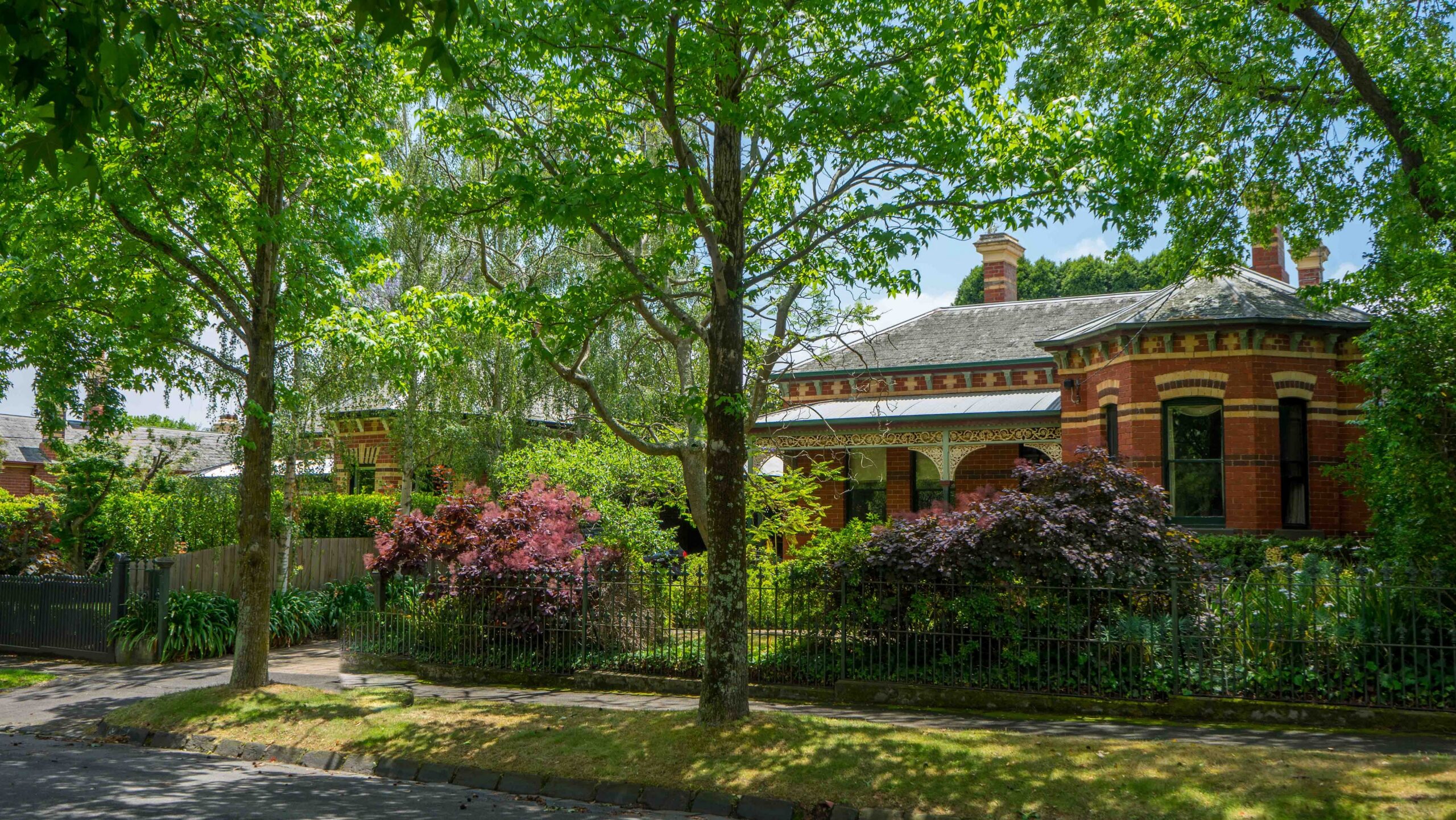
People don’t fall in love with a suburb because of its zoning. They fall in love with its streets, gardens, trees, heritage buildings and sense of place.
Traditionally, planning controls have sought to protect this character through heritage overlays, neighbourhood zoning, and design guidelines tailored to local context.
The current planning changes place greater emphasis on standardised, state-wide controls, shifting the balance away from local identity and place-based planning and towards greater uniformity and development yield.
Protecting neighbourhood character is not about freezing suburbs in time. Every generation contributes to the story of a city. The challenge is ensuring new development adds to that story rather than erasing it.
At a glance
- The new planning framework places greater emphasis on standardised state-wide planning controls than neighbourhood-specific design guidance.
- Neighbourhood character is created by more than individual buildings. It includes gardens, trees, setbacks, streetscapes and the spaces between buildings.
- Many established neighbourhoods were deliberately planned to have their own distinctive character. Standardised planning controls increase the risk of “cookie-cutter” development across very different suburbs.
- Even where heritage buildings remain protected, the broader heritage setting and neighbourhood character can gradually change through surrounding redevelopment.
- The planning reforms shift from place-based planning towards a more standardised, one-size-fits-all approach across neighbourhoods with very different histories, landscapes and built forms.
Heritage overlays and heritage precincts
This page explains how the planning changes affect neighbourhood character and the broader heritage setting. For more information about heritage overlays and heritage precincts in Boroondara, see In Boroondara → Heritage at risk.
What is neighbourhood character?
Neighbourhood character is often dismissed as vague or subjective. It isn’t. In reality, it refers to the combination of physical features that give an area its distinctive identity and sense of place.
It is created by the collective relationship between buildings, building scale and spacing, gardens, mature trees, front setbacks, streetscape rhythm, architectural styles and materials, street width and layout, landscape and topography, and the relationship between buildings and the public realm.
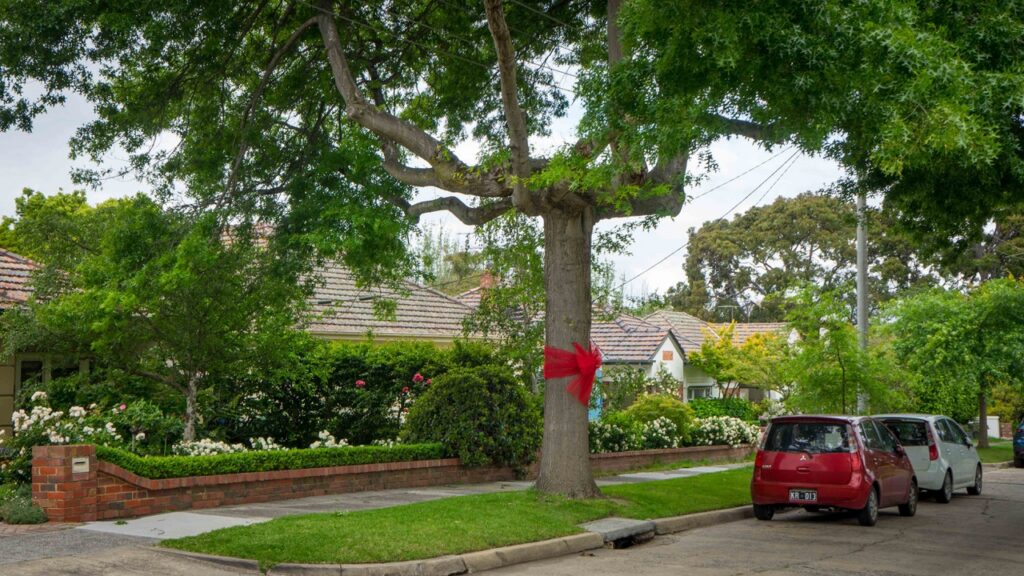
Neighbourhood character is not accidental. It is the result of decades of planning decisions about how buildings, gardens and streets relate to one another.
Heritage is an important part of this character. Heritage precincts derive their significance not simply from individual buildings, but from the way buildings, gardens, street trees, setbacks, fencing and landscape work together to create a coherent streetscape and sense of place.
Boroondara has one of the largest concentrations of heritage properties in Victoria. There are over 10,000 buildings protected under local Heritage Overlays, predominantly representing Victorian, Federation, and interwar architecture.
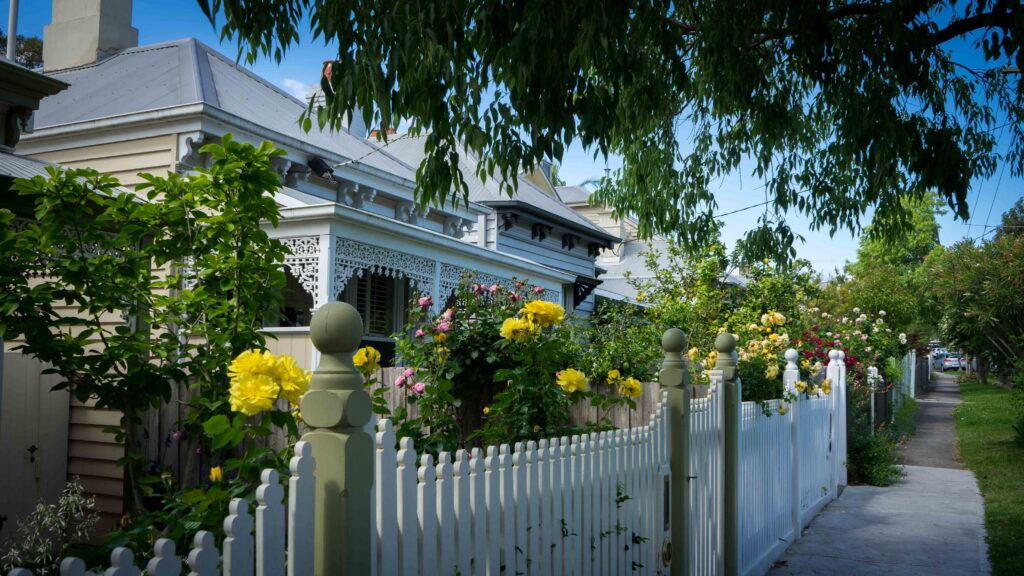
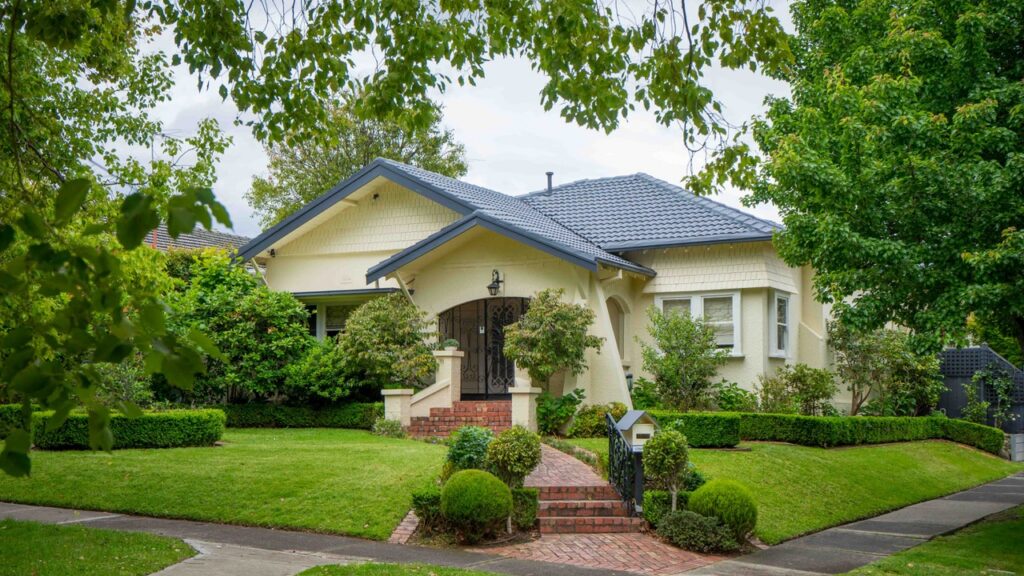
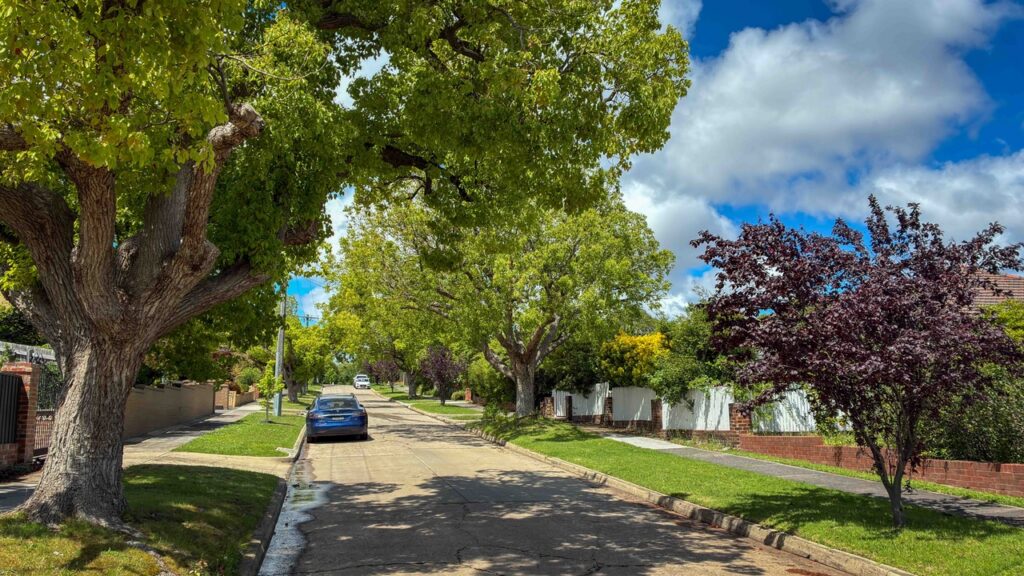
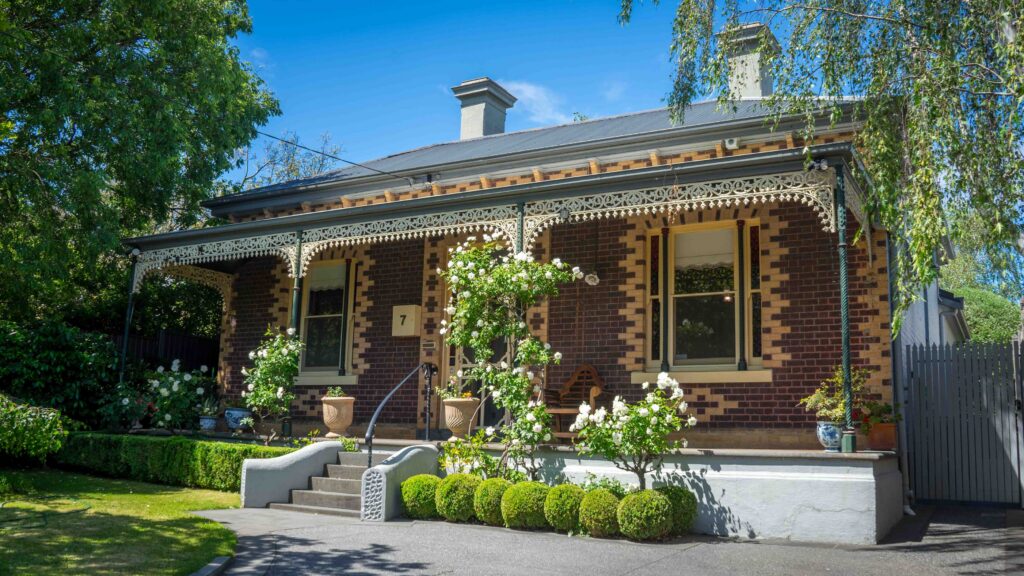
The images below illustrate just two of the many distinctive neighbourhood characters found across Boroondara.
These streets are both located within heritage precincts, yet they express very different neighbourhood character. The Victorian cottages of Hawthorn have a markedly different scale, landscape setting and streetscape rhythm from the generous gardens and Inter-war homes that characterise many other parts of Boroondara.
Place-based planning vs one-size-fits-all planning
Before the recent planning changes, councils invested considerable effort in understanding the distinctive character of individual neighbourhoods and preparing design guidance that reflected those differences.
Boroondara, for example, has identified 80 separate neighbourhood character precincts, each with its own preferred future character.
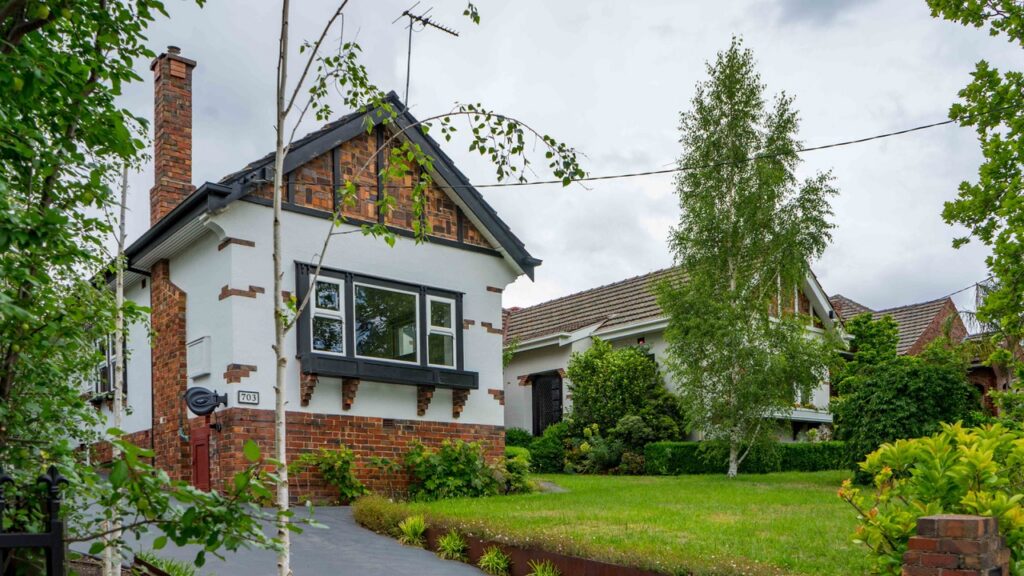
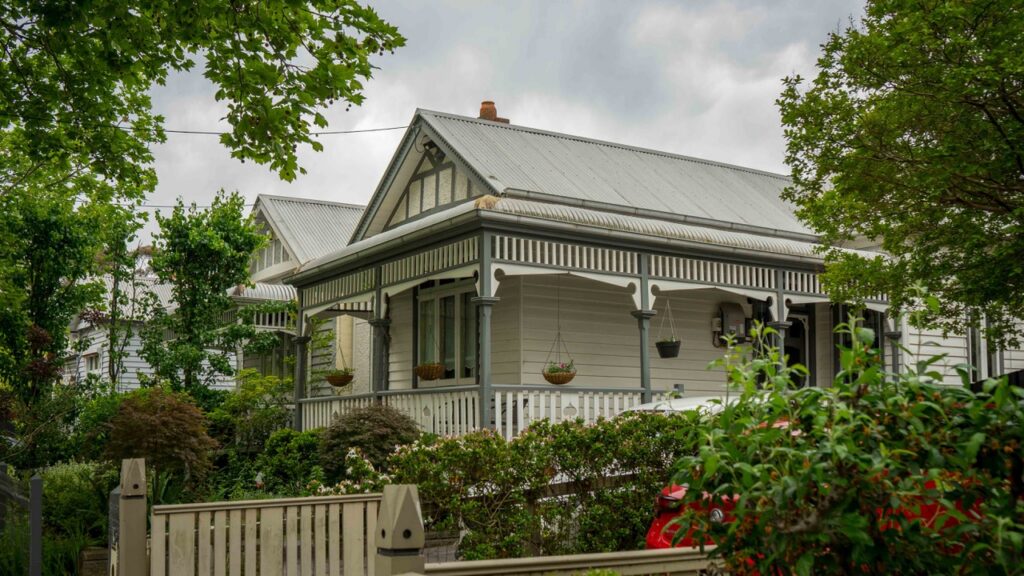
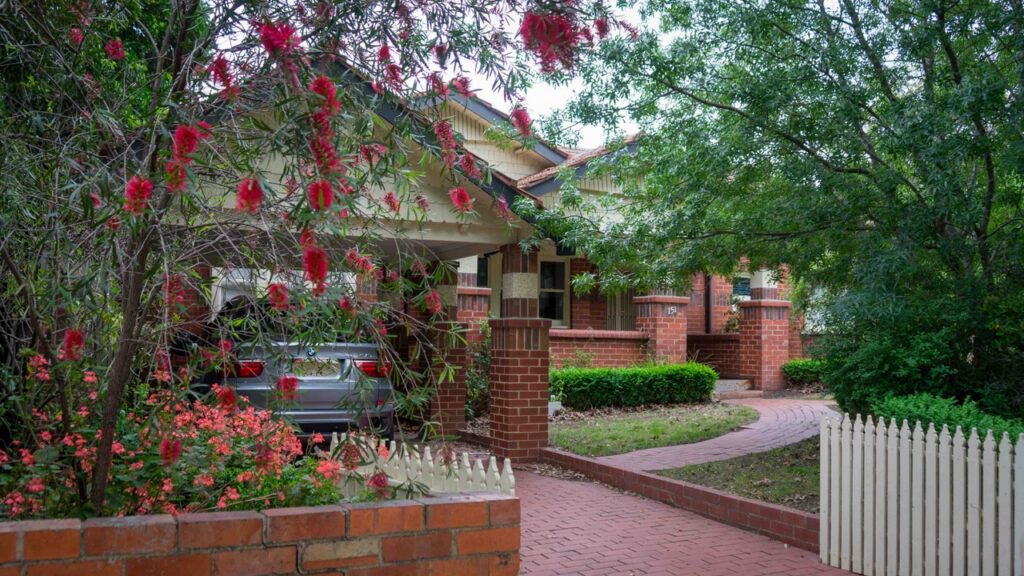
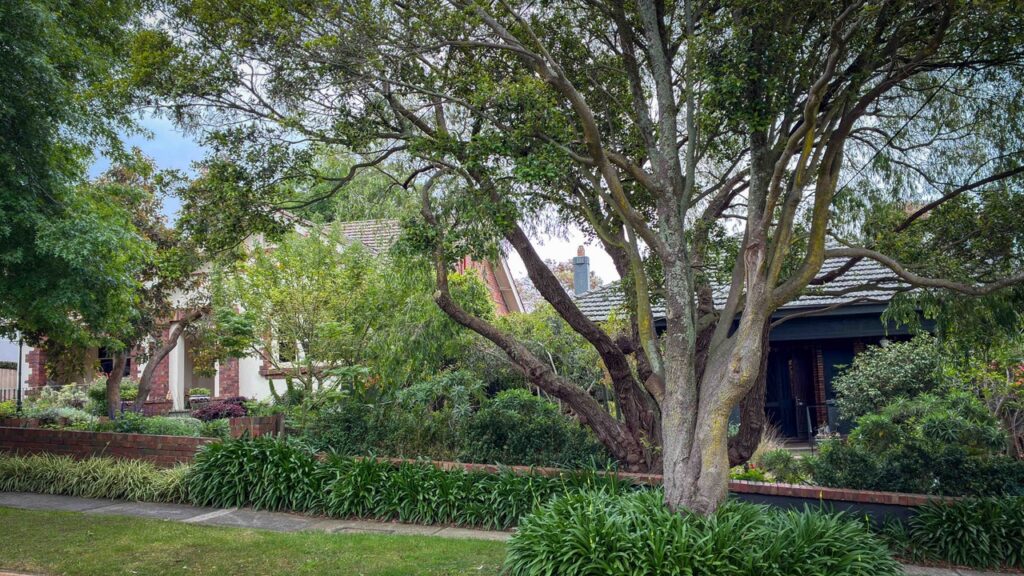
Protecting neighbourhood character does not mean preventing change. It means guiding new development so that neighbourhoods continue to evolve while retaining the qualities that make each area distinctive and define their preferred future character.
Across Boroondara’s precincts, Council’s recurring objectives include retaining mature trees and landscaped gardens, maintaining appropriate setbacks, respecting building scale, preserving detached streetscapes and reinforcing the established rhythm and spaciousness of neighbourhoods.
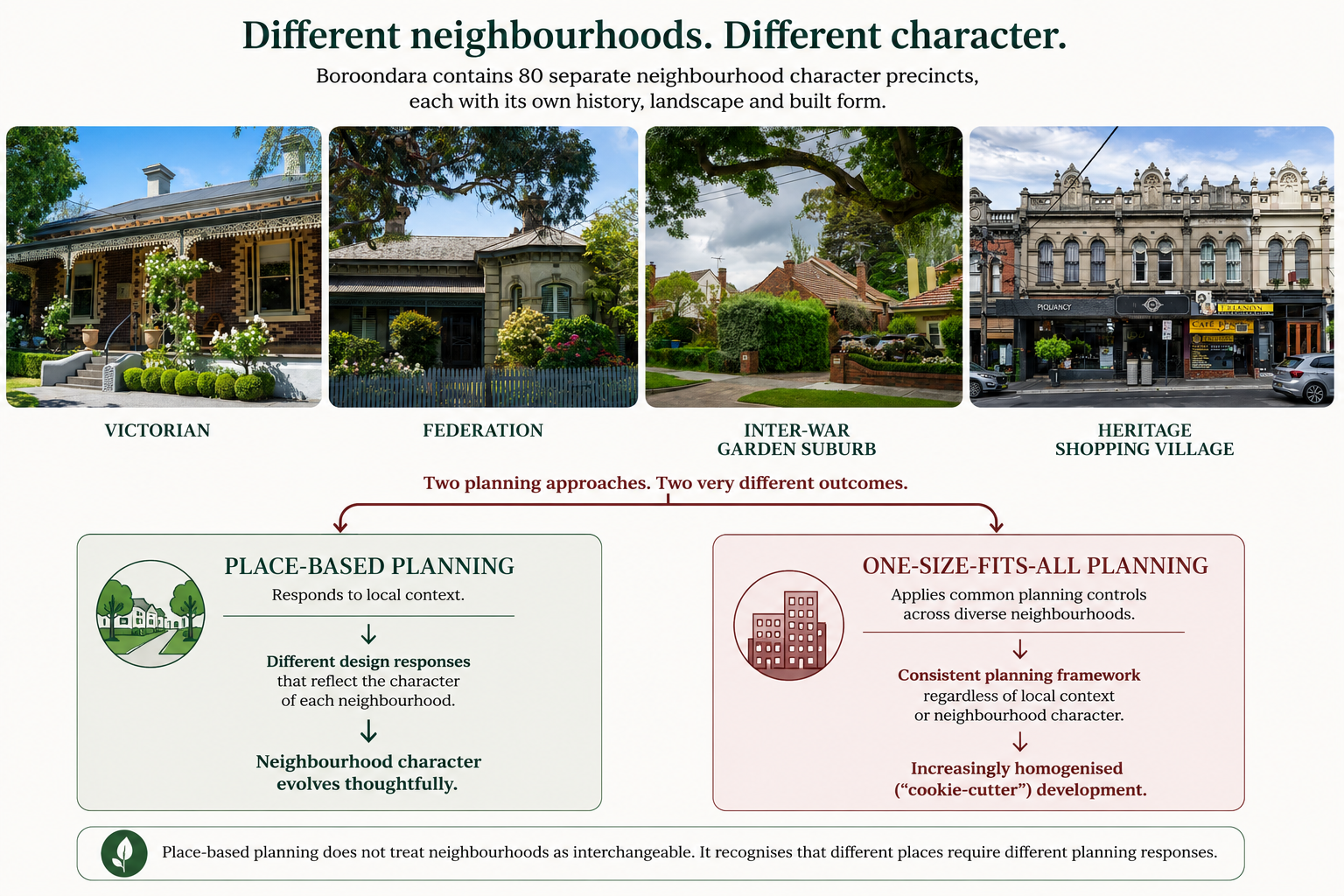
The current planning changes shift away from this place-based approach.
The deemed-to-comply provisions of the Townhouse and Low-Rise Code and the Mid-Rise Code introduce increasingly standardised planning controls across neighbourhoods with very different histories, landscapes and built forms.
This means:
- Development is increasingly assessed against standardised planning controls rather than neighbourhood-specific design objectives.
- Neighbourhoods with very different histories and identities are increasingly expected to accommodate growth using the same planning rules.
- The same planning standards and building envelopes can be applied regardless of local context.
- Unique streetscapes are treated in much the same way as more generic urban areas.
The result is a planning system that places greater emphasis on consistency and development yield than on responding to local context. Over time, this can lead to increasingly homogenised development, often described as “cookie-cutter” design, across neighbourhoods that were once deliberately planned to be distinctive.
Impact on streetscapes
Changes to setbacks, building heights, and design requirements allow for larger, more imposing developments in established neighbourhoods.
Over time, this can result in:
- Buildings with reduced front setbacks that no longer align with the rest of the streetscape.
- Loss of visual cohesion between neighbouring properties.
- Buildings that dominate or overshadow surrounding homes.
- Reduced space for front gardens, mature trees and landscaping.
- A loss of open space around and between buildings.
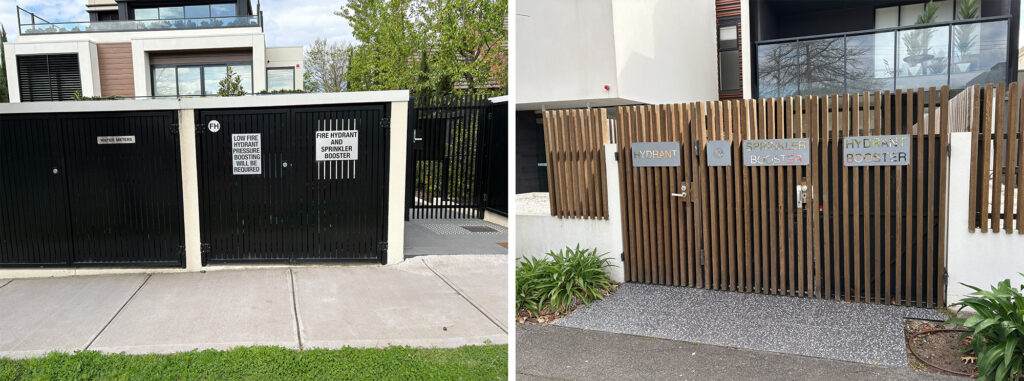
- More hard surfaces, driveways and vehicle access.
- Greater visual prominence of garages, utility infrastructure and ground-floor services.
Street by street, these changes fundamentally alter how neighbourhoods look and feel.
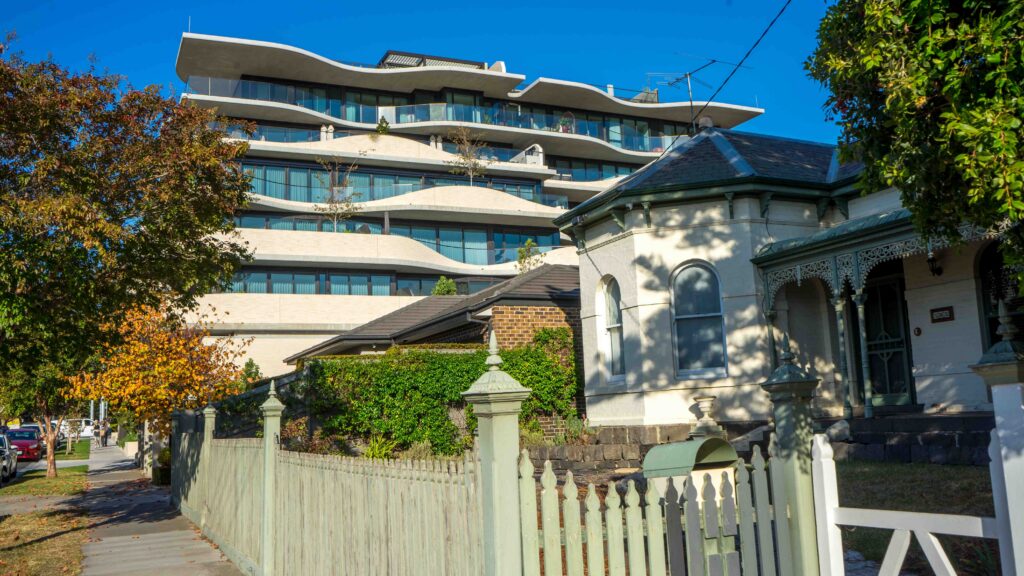
See Concerns → The reality of piecemeal mid-rise development for examples of how piecemeal, market-led redevelopment can gradually transform established neighbourhoods.
The character of many Boroondara streets is defined not simply by individual houses, but by the continuity of generous front gardens, mature trees, landscaped setbacks and open space between buildings.
These elements create a rhythm along the street, soften the built form and contribute to the leafy, spacious character for which many neighbourhoods are known.
As redevelopment becomes more widespread, this balance gradually shifts. Larger building footprints, reduced setbacks and increased paving make the built form more visually dominant, while gardens and mature vegetation become less prominent.
The cumulative effect is a gradual transformation of streetscapes from leafy, garden settings where buildings sit within the landscape, to streets where buildings, driveways and hard surfaces increasingly dominate the public realm.
Heritage extends beyond individual buildings
While heritage overlays technically remain in place, their effectiveness is increasingly uncertain under the new system. For more information, see Heritage at risk.
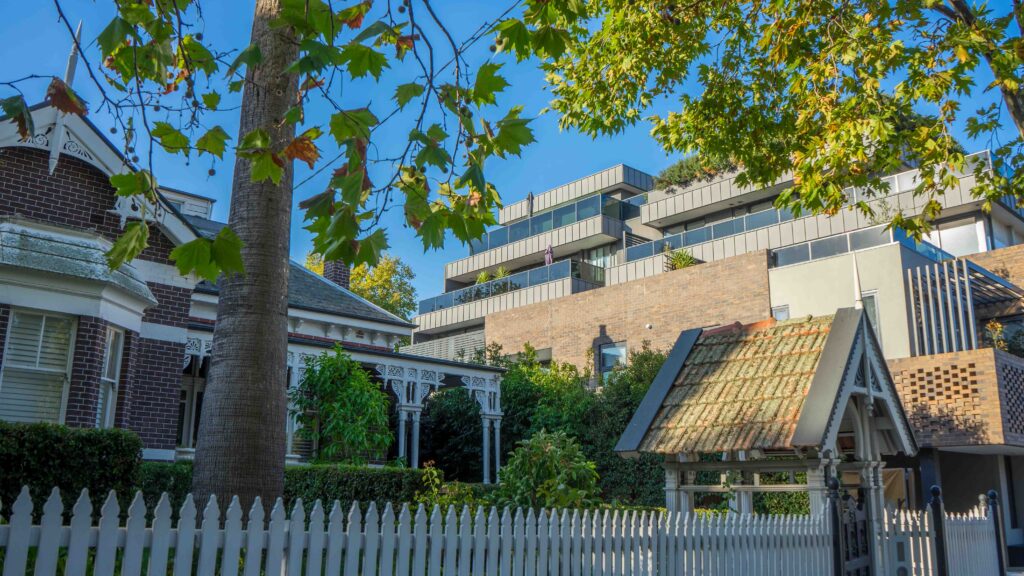
Protecting an individual heritage building does not protect the streetscape around it.
This can result in:
- Demolition of character-contributing buildings that are not individually protected.
- Infill development that alters the established scale and rhythm of the streetscape.
- Gradual erosion of the broader heritage setting.
Neighbourhood character is not defined by a single building, but by the collective qualities of an area — qualities that are at risk under widespread rezoning.
Reduced role for local knowledge
Understanding neighbourhood character requires detailed knowledge of local history, landscape and built form. Traditionally, councils, heritage specialists and local communities have played an important role in identifying these qualities and protecting areas of significance thereby shaping planning responses.
Under the planning changes:
- Council-led planning strategies are overridden.
- Opportunities for expert input are reduced.
- Community understanding of local character is side-lined.
This weakens the ability to apply nuanced, place-specific planning decisions that respond to the distinctive character of individual neighbourhoods.
More than residential streets
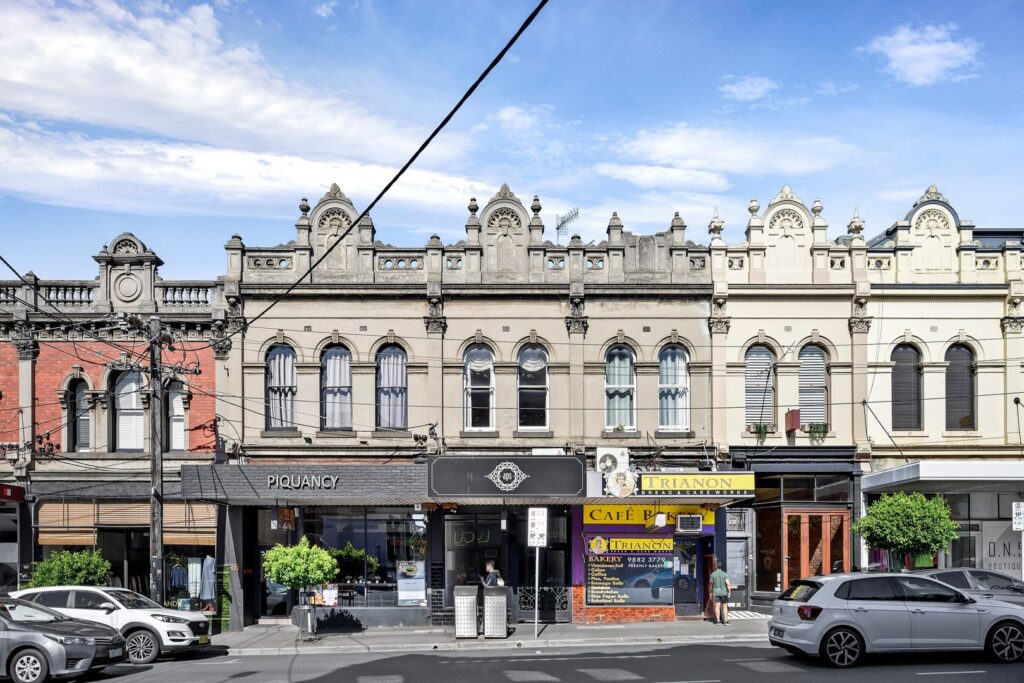
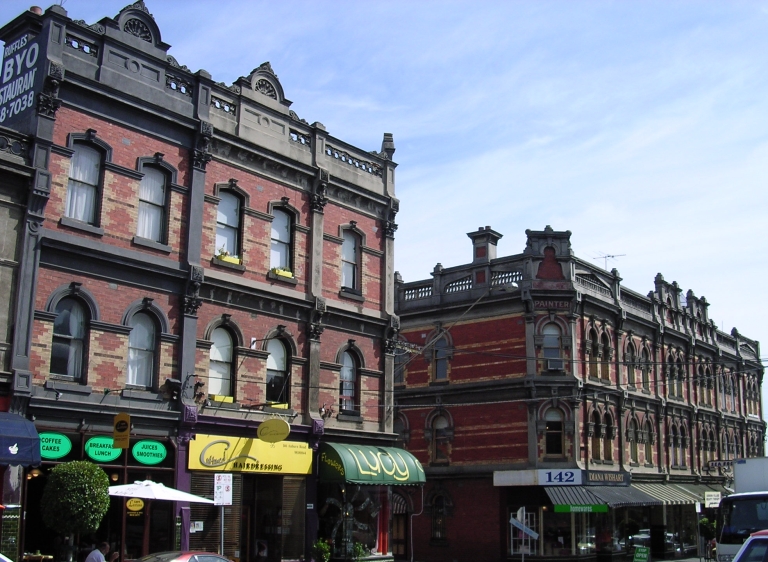
Neighbourhood character extends beyond residential areas. Many of Boroondara’s heritage shopping strips make an important contribution to local identity through their historic shopfronts, consistent building scale, fine-grain architecture and relationship to surrounding neighbourhoods.
As redevelopment intensifies, there is a risk that these qualities may gradually be diminished through facadism, taller adjoining development and changes to the historic scale and setting of these centres.
Why this matters
Heritage and neighbourhood character are not luxuries. They are part of what makes Melbourne one of the world’s most liveable cities. They give neighbourhoods their identity and create places where people want to live.
They also:
- Reflect Melbourne’s history and cultural development.
- Support tourism and local economies.
- Influence property values.
- Contribute to health and wellbeing by creating attractive neighbourhoods.
Once lost, these qualities cannot be easily recreated.
What this means for Melbourne
Melbourne’s strength has never been uniformity — that every suburb looks the same. It lies in the diversity of its neighbourhoods, each with its own history, landscape and architectural character.
Cities inevitably change, but good planning responds to the qualities that make different places distinctive rather than treating them as interchangeable.
The current planning changes place greater emphasis on standardised planning controls across neighbourhoods with very different histories and built forms. Over time, this creates a risk that Melbourne’s distinctive suburbs will become increasingly homogenised through “cookie-cutter” development.
Protecting heritage and neighbourhood character does not mean preventing change but it does require careful, localised planning.
Without that balance, Melbourne risks losing the very qualities that make it a desirable place to live.
What kind of city do we want future generations to inherit?
Every generation leaves its mark on a city. Good planning should ensure that future generations inherit neighbourhoods that are at least as rich in character, beauty and liveability as those we enjoy today.
Explore related topics
These planning issues are closely connected. You may also be interested in:
- In Boroondara → Heritage at risk
How heritage precincts and historic streetscapes are affected by the planning changes. - Concerns → Loss of gardens and tree canopy
Why private gardens, mature trees and landscape settings are essential to neighbourhood character. - Concerns → Community consultation and engagement
Were communities given a genuine opportunity to shape the future of their neighbourhoods?